FREE UK delivery on orders of £200 or more
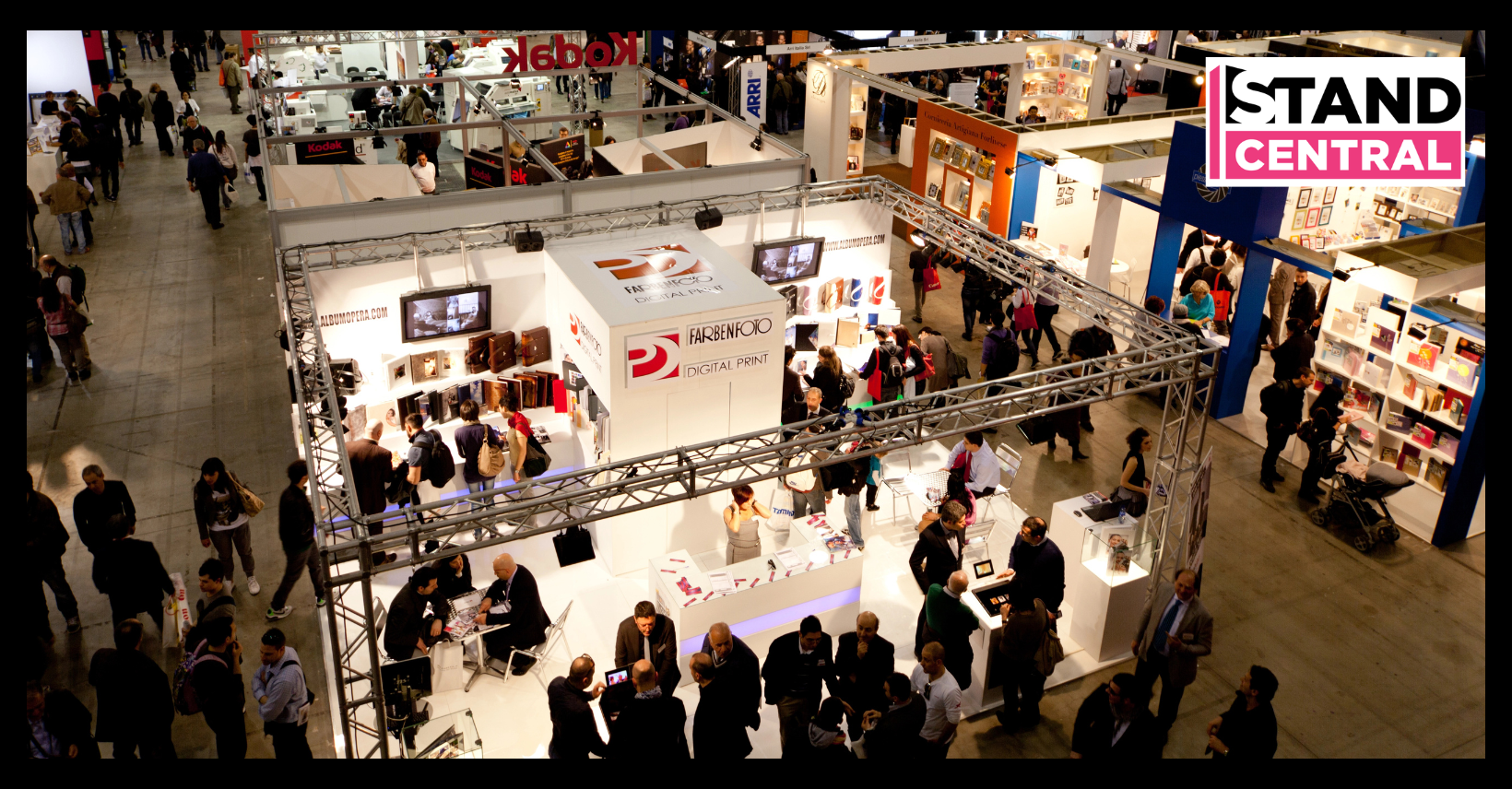
What is a trade show? It is an event where companies from one industry rent booth space in a hall for a few days to show their products and services to buyers, distributors, partners and the trade press. Cambridge Dictionary defines a trade show as an event at which companies show their products and services to customers and possible customers, and lists trade fair and trade exhibition as other names for the same thing.
In the UK you will also hear them called exhibitions, expos or simply “the show”.
Quick answer: what is a trade show and how does it work?
- What it is: a business event, usually in a venue such as Excel London, NEC Birmingham or Olympia London, where exhibitors pay for floor space and visitors come to see what is new in their sector.
- Who runs it: an organiser sells the stand space, markets the show to visitors and publishes the rules in a manual. The venue provides the hall, and contractors supply power, furniture and shell scheme walls.
- How exhibitors pay: by the square metre, ex VAT. The 26 headline space-only rates we found in our study of UK trade shows ran from £125 to £1,100 per m².
- How it runs: book months ahead, build your stand during build-up, staff it on the open days, take it down at breakdown, then follow up the leads.
- Who visits: trade shows are mainly for industry professionals. Consumer trade shows are open to the general public and usually sell tickets.
A trade show is an event where businesses meet buyers
A trade show is a marketplace with a time limit. For a few days, most of the suppliers in a particular industry stand in one hall, and the people who buy from them come to compare options face to face. A visitor can see ten competing products in an afternoon, and an exhibitor can meet more qualified prospects in a day than a sales rep could visit in a month.
Most UK trade shows focus on a sector (pharmacy, construction, security, gifts, business travel) rather than a product. Alongside the stands there is usually a programme of free talks on industry trends and innovation, panel sessions and awards, which is a big part of why visitors attend trade shows.
Trade show, trade fair, exhibition or expos?
The names overlap, and organisers use them loosely. As a rule of thumb:
| Term | What it usually means in the UK |
|---|---|
| Trade show | An industry event for professionals, often trade-only. The most common term in search and in the US. |
| Trade fair | Same thing. More common in Europe and for large international events. |
| Exhibition | The everyday UK word. Can mean a trade show, a consumer show or an art exhibition, so the context matters. |
| Expo | A branding choice. Plenty of trade-only events call themselves an expo. |
| Conference | A programme of talks first, with a smaller exhibition alongside it, usually for sponsors. |
You will also see “tradeshow” written as one word. Both spellings mean the same thing.
Primary types of trade shows

Trade-only (B2B) shows
Business-to-business shows are industry-specific: visitors register with their company and job title, and some organisers vet registrations. The goal is usually a meeting, a quote or a new business partnership rather than a sale on the day, so each type of trade show needs a different plan.
Consumer shows
Open to the public, normally with paid tickets. Exhibitors often sell on the stand, so stock, card payments and fast service matter more than brochures. Some events run trade-only days followed by public days, which means two stand set-ups and two staff briefings.
International trade fairs and virtual events
Large international trade fairs, such as the Consumer Electronics Show (CES) in Las Vegas, draw visitors from many countries. Online platforms grew during the pandemic, but for most exhibitors they work best as an add-on to the physical show rather than a replacement.
How do trade shows work? The exhibitor’s timeline
Every show is different, but the sequence is the same, and the manual sets the exact deadlines. Our research into 21 UK exhibitor manuals shows how many separate deadlines a single show can set.
| Stage | What happens | What you need to do |
|---|---|---|
| Choosing a show | Organisers publish visitor profiles, floor plans and rate cards (or ask you to enquire). | Ask for the visitor breakdown and the full rate card in writing. |
| Booking | You sign a contract for a stand of a set size, either space only or shell scheme. | Check minimum sizes, what the shell includes, and any compulsory fees. |
| Exhibitor manual | The organiser sends rules and deadlines: stand heights, power orders, risk assessments, catalogue entries. | Diary every deadline. Late orders for power and furniture often cost more. |
| Preparation | Graphics, displays, literature and staff rotas come together. | Follow a trade show preparation plan and a stand equipment checklist. |
| Build-up | The hall opens to exhibitors and contractors before the show. | Arrive with everything labelled; deliveries follow the venue’s booking rules. Our trade show shipping guide covers this. |
| Open days | Visitors walk the aisles, attend talks and stop at stands. | Staff the stand, run demos, qualify and record leads. |
| Breakdown | Exhibitors dismantle and remove everything within a set window. | Pack displays carefully if you will reuse them. |
| Follow-up | The show is over; the selling isn’t. | Contact leads while the conversation is fresh and measure results. |
Shell scheme or space only: how booth space is sold
- Shell scheme: the organiser’s contractor builds a simple booth from white panels, usually with carpet and a fascia board carrying your name. Only 7 of the 26 shell rate cards that listed inclusions in our study included a power socket.
- Space only: you get bare floor and bring your own stand, so you are responsible for the structure, power orders and often a risk assessment.
Space only is not automatically cheaper. Across 25 rate cards that priced both, a shell added a median of £50 per m². At one show the smallest space-only booking cost £6,210, against £2,889 for a 3m x 3m shell. The full figures are in our research on 202 UK trade shows.
If you take a shell, read our shell scheme stand design guide. If you go space only on a small footprint, portable exhibition stands are the usual answer because they pack into cases and go up without tools. Most small businesses start with trade show displays such as a printed back wall and a counter.
Who are the trade show attendees?
A typical trade-only audience, and the people you network with, includes buyers, specifiers such as engineers or architects, small business owners, distributors looking for new products or services, and journalists from the trade press.
Exhibitors and visitors come for different reasons. A Cornell study of more than 2,500 exhibitors and attendees found exhibitors were mainly focused on business and contact development, while attendees were looking for a unique experience and were motivated heavily by educational goals. So a stand that teaches something gets more useful conversations, and every attendee is a chance for feedback on your product.
What happens at a trade show?
- Stands and demonstrations: exhibitors showcase products and services, hand out samples and talk visitors through options.
- Talks and seminars: most shows run free sessions; speaking slots are sometimes offered to exhibitors.
- Pre-booked meetings: many organisers offer meeting tools so exhibitors can book appointments in advance.
- Network events: receptions, awards and conversations in the aisles help you network with industry professionals and meet potential partners.
- Launches and press: new products are often timed for the show, and trade journalists walk the floor looking for stories.
See exhibition stand ideas from real UK shows if you are planning your first one.
How much does it cost to exhibit at a trade show?
The biggest single cost is the space, and it varies far more by audience than by venue. Examples from the published rate cards we collected on 28 September 2026, all ex VAT:
| Show | Venue | Headline space-only rate per m² |
|---|---|---|
| Business Travel Show Europe | Excel London | £1,100 |
| MSP Show (Managed Service Provider Show) | Excel London | £885 |
| Pharmacy Show | NEC Birmingham | £789 |
| Euro Bus Expo | NEC Birmingham | £207 |
| BTME | Harrogate Convention Centre | £233 |
| OTS (Outdoor Trade Show) | Exhibition Centre Liverpool | £125 |
On top of space, budget for your stand and graphics, power, furniture, any compulsory organiser fees (six shows in our study charged them, adding 4.4% to 13.9% to a 3m x 3m shell), travel, hotels and staff time. Only 46 of the 202 shows we checked published any price at all, so ask for the full rate card. Our trade show booth cost guide breaks the budget down.
Why do businesses exhibit at a successful trade show?

Because the buyers come to them. A trade show puts a product or service in front of people who chose to spend a day in that sector, and allows conversations that are hard to have by email. The Association of Event Organisers reports that 87% of business directors agree it is easier to communicate face to face than on the phone or by email.
The usual goals are lead generation, product launches, partnership and distributor deals, brand awareness and meeting existing customers. Whether that justifies the cost depends on the audience and your follow-up; see the benefits of exhibiting at trade shows.
Frequently asked questions
Are trade shows open to the public?
Trade-only shows are not; consumer shows are, usually with paid tickets.
Is a trade show the same as a fair?
In practice, yes. Large European and international events often use “fair”, while UK organisers tend to say show.
What is a trade show in marketing?
A face-to-face channel within a wider marketing strategy. Companies in a specific industry use it to generate leads, launch products and build their brand, and measure it by cost per qualified lead and sales that follow.
How long does a trade show last?
Most run for a few days, with build-up before and breakdown after.