FREE UK delivery on orders of £200 or more
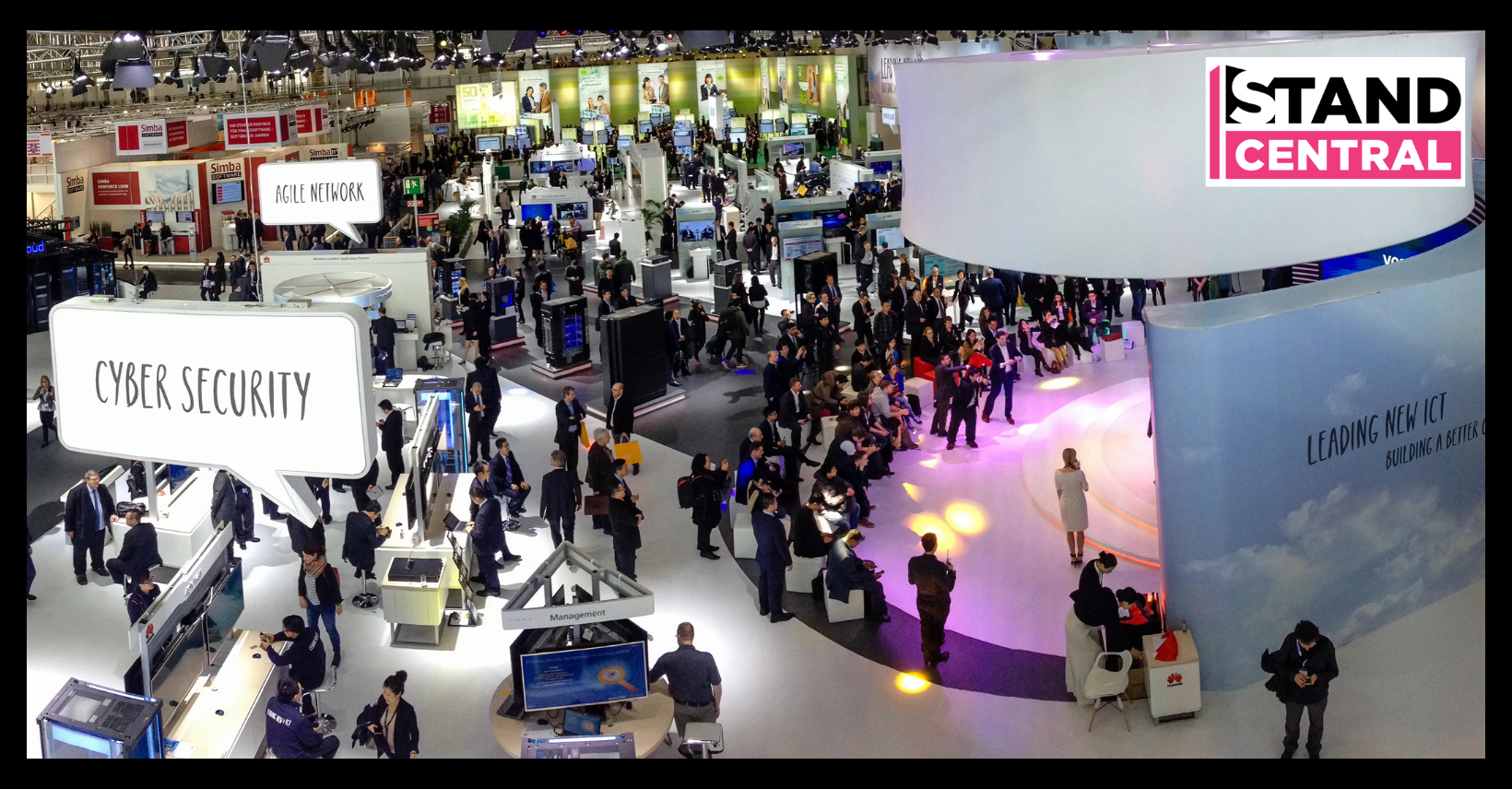
How to stand out at a trade show comes down to four things that happen around your booth, not just on it: attendees who planned to visit you before the doors opened, booth staff who work the aisle instead of waiting behind a counter, a reason for passers-by to stop, and follow-up quick and specific enough that you are remembered after the show. Most exhibitors put nearly all their effort into the booth stand itself, which is why so many blur together.
This guide covers those four levers. For the physical stand, including graphics, layout, lighting and height, see our guide to designing a trade show booth.
Quick answer: how to stand out at trade shows
| Lever | What to do | When |
|---|---|---|
| Pre-show promotion | Invite customers and prospects by name, give them your stand number and a reason to come, and book meetings in advance. | From the moment you book |
| People | Brief every person on one headline, three qualifying questions and the next step. Staff the aisle edge, not the back of the stand. | Briefing before day one |
| Activity | Run something worth stopping for at fixed, advertised times: a demo, a challenge or a show-only offer. | Every day of the show |
| Lead capture | Write down what each person needs and what happens next, and record what they agreed to receive. | Every conversation |
| Follow-up | Send a specific follow-up, referencing the conversation, while the show is still fresh. | The first working days after the show |
Pre-show: get attendees planning to visit your booth
The easiest visitor to win is one who already has your booth number in their diary. Pre-show promotion costs little and puts you ahead of any exhibitor relying on passing foot traffic.
- Complete your exhibitor listing in full. Most organisers give each company a profile in the show catalogue, website or app. Fill in every field, use the same headline as your stand, and add products and a contact name. Attendees search these listings to plan their day.
- Invite your own list by name. Email current customers, open quotes and lapsed accounts with your stand number, the dates and one reason to visit: a launch, a demo time, a person worth meeting or a show-only offer. Sneak peeks of a new product or service work well.
- Book meetings before you arrive. Booked conversations keep you busy at quiet times, and a busy stand draws people in.
- Put your stand number everywhere. Email signatures, your website, LinkedIn and other social media platforms, plus the event hashtag in posts.
- Tell the trade press. If you are launching something, ask the organiser how to get it into their press materials.
Check the rules before you email prospects you have not dealt with before. The ICO explains that the PECR rule on marketing emails does not apply to corporate subscribers such as limited companies and LLPs, but sole traders and some partnerships are treated like individuals, and UK GDPR still applies whenever you use a named person’s details. For a full countdown, see how to prepare for a trade show.
On the day: booth staff make the difference
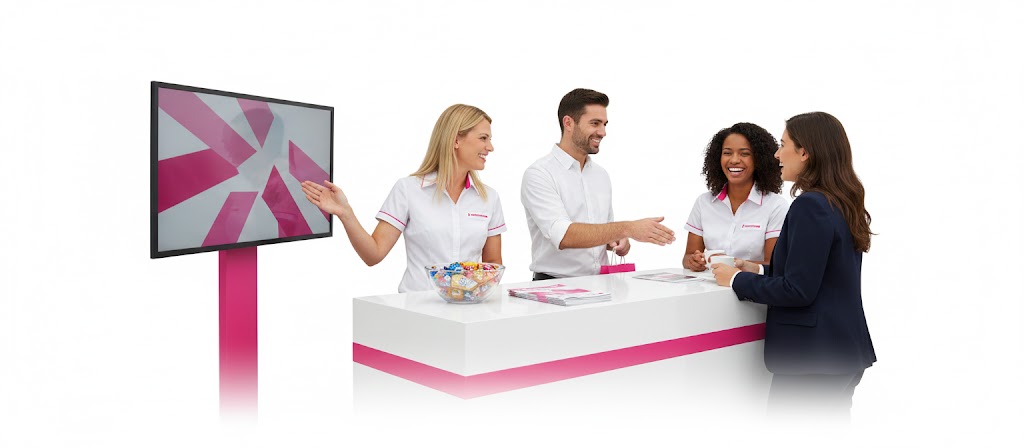
Two booths with identical graphics can get completely different results because of the people on them. Attendees decide whether to stop in a moment, and what decides it is usually whether someone looks ready to talk.
Give everyone a role
- Greeter: stands at the aisle edge, makes eye contact and opens conversations.
- Specialist: takes over once a visitor is interested, for demos and detailed questions. On B2B products this is usually someone from your sales team.
- Lead taker: records who the visitor is, what they need and what happens next.
On a small stand one person may cover two roles, but decide in advance who does what, and rotate so the greeter role is never filled by whoever is most tired.
Open with a question about them
“Can I help you?” invites “just looking”. Questions about the attendee’s work get a real answer, because every attendee came with a problem to solve: “What brings you to the show?” or “What are you using at the moment?” Write three qualifying questions on your briefing sheet so everyone uses them.
Rules everyone follows
- No phones except to show the product, and no eating or sitting behind the counter.
- Never more staff talking to each other than to visitors.
- Step forward to the aisle edge; do not wait at the back wall.
- End every conversation with an agreed next step, even if it is “no fit”.
If you need extra people, our guide to trade show models explains your options, and what to wear to a trade show helps your team look like one brand, and keeps your brand consistent from the aisle.
Attract a crowd: give people a reason to stop
A crowd draws a crowd. The aim is to create a moment, several times a day, when people gather at your booth, with your team ready to talk when it happens.
- Demos at fixed times. Announce them on the stand, in emails and on social media. One clear result beats a tour of every feature.
- Something to try. Letting people handle the product, take a challenge or answer a quiz turns passers-by into participants. Our interactive trade show booth ideas cover every budget, from simple games to augmented reality.
- A show-only offer. A discount that ends with the show gives people a reason to talk now. State the terms clearly.
- A mascot or costumed character can attract more visitors at a consumer exhibition, but on a B2B trade show floor a live demo usually works better.
- Content you can reuse. Photos and short videos extend the show online, but check the rules first. At Excel London, organisers manage filming and photography within their event spaces, so ask before you film visitors.
Giveaway ideas that work for exhibitors
A giveaway works when it is linked to a conversation, not handed to everyone who walks past. A branded pen or other freeby is forgotten by the car park; something useful to your buyer, given at the end of a good conversation, leaves a lasting impression on attendees and keeps your contact info on their desk. Pair it with a brochure or QR code that leads to the next step. Our trade show giveaways guide covers what to choose and how to budget.
Booth presence: make the stand support the people
Your stand should make your team’s job easier: a headline that tells visitors what you do before anyone speaks, an open front so people can step in, and something above head height so the people you invited can find you. Eye-catching backlit graphics from our LED lightboxes range help in a dim hall, and a hanging banner is the most direct way to be found in a large one, subject to the organiser’s rigging rules. If you are planning your first trade show, start with a printed back wall from our exhibition stands range and a branded counter; good booth design does the rest.
Lead capture you can actually use
Standing out is wasted if you cannot follow up. For every conversation, record the person’s name and company, what they need, how soon, and the agreed next step. A badge scan tells you who someone is, not why they stopped, and a pile of business cards is not a lead list.
Be careful with prize draws. The ICO’s own example is someone dropping a business card into a prize draw box: that shows consent to being entered into the draw, not to marketing. If you want to send marketing afterwards, ask clearly and record the answer. See our trade show lead capture guide for more.
Follow up while you are still remembered
Attendees meet many exhibitors in a day. Decide before the show who follows up which trade show leads and by when, so the work starts the morning after.
- Hot leads: a call or personal email that references the conversation and confirms the next step.
- Warm leads: a personal email with the specific information they asked for.
- Everyone else: a short thank-you, and marketing only where they agreed to it or another lawful basis applies.
Mention something specific from the conversation. “Great to meet you at the show” is what every other company will send.
Measure ROI and repeat what worked
After each show, divide the total cost (space, booth, travel, staff time) by the number of qualified leads to get a cost per lead you can compare with other channels. Note which demo times, opening questions and invitations produced the best conversations, and build them into your trade show strategy for the next trade show. Our guide to trade show costs helps you add up the full cost.
Frequently asked questions
How do you stand out at a trade show with a small booth?
Through activity and people more than size: a single clear headline, an open front, a greeter at the aisle edge, and demos at advertised times so a small crowd forms. Booked meetings keep it busy, and a busy stand attracts more potential customers.
What should booth staff say to visitors?
Open with a question about the visitor, such as “What brings you to the show?”, then use three agreed qualifying questions and finish every conversation with a clear next step.
How can you use social media to stand out?
Post your stand number, demo times and a preview in the weeks before, use the event hashtag during the show, and share photos of real conversations afterwards where the organiser’s rules allow.
What are the best tips for exhibiting at trade shows?
Promote your stand before you exhibit, give each team member a role, plan activity at set times, record a next step for every lead, follow up within days and work out your cost per qualified lead.