
Ever looked at all the pieces of your trade show booth and wondered how on earth they’ll make it safely to another city?
The process can seem overwhelming. With so many moving parts, a single mistake can turn weeks of planning into a costly mess.
Shipping to trade shows doesn’t have to feel risky or unpredictable. With the right preparation, your freight will reach the exhibit floor on time and in perfect condition, every single time.
This guide from Stand Central breaks down the entire trade show shipping process, from selecting the best shipping methods to mastering show logistics, so you can stay focused on making your next event a success, not searching for missing crates.
Quick Answer: Shipping To Trade Shows
To ship to a trade show, start by confirming your exhibit’s size, weight, and delivery window. Choose a carrier that specialises in trade show shipping and decide between delivering to the advance warehouse or direct to show. Pack and label everything clearly, keep paperwork handy, and always account for material handling and drayage fees. Aim to have your shipment arrive days before your move-in date to avoid last-minute stress.
The Ins And Outs Of Trade Show Shipping
Trade shows aren’t like regular deliveries. The logistics are more complex, deadlines are tighter, and the show floor can feel like organised chaos.
Missing the delivery window can mean exhibit materials wait in the marshaling yard for hours, or worse, don’t get delivered at all.
It’s essential to ensure your shipment is booked with a reliable carrier who understands trade show logistics. The general contractor and show decorator set strict schedules for move-in and unloading at the dock.
If freight arrives early, it goes to the advance warehouse. Arriving late might mean missing your slot or paying extra handling fees.
Why Trade Show Shipping Is Unique
- Strict Deadlines: Every trade show has precise delivery dates and times. If your carrier misses the window, your pallet sits in the marshaling yard until space opens.
- Material Handling Fees: These costs cover unloading, moving freight to your booth, and sometimes storage. Don’t confuse these with shipping costs.
- Advance Warehouse vs. Direct To Show: You can ship to the advance warehouse weeks before the show, or direct-to-show for just-in-time delivery. Each method has different benefits and risks.
Choosing The Right Shipping Methods For Trade Shows
Every shipment to trade shows comes with its own challenges. Some shipments require small parcel services for promotional items, while others need full freight carriers for large exhibits.
Key Shipping Methods
- Parcel Services: Good for lightweight, non-essential items.
- Common Carriers: Affordable, but may not understand the ins and outs of show logistics.
- Specialised Trade Show Carriers: My go-to for any major expo. They know how to handle advance warehouse deliveries, show floor procedures, and tight move-in deadlines.
Always check if your carrier can provide a bill of lading and accurate tracking. This makes it easier to resolve problems if your shipment is delayed or lost.
My Shipping Tips For Exhibitors
- Use strong crates or pallets to protect your exhibit materials.
- Label every piece with your booth number, exhibitor name, and contact details.
- Confirm the date and time your shipment will arrive at the loading dock or advance warehouse.
- Double-check all paperwork, including the bill of lading and shipping labels.
- If you are still in the planning phase, understanding how much a trade show booth costs will help you allocate the right budget for freight and drayage.
Proper packing and labelling reduce the risk of damage and confusion when you’re shipping your freight.
Advance Warehouse Or Direct To Show: Which Is Best?
When shipping to trade shows, you’ll choose between delivering to the advance warehouse or direct-to-show site. Each option requires a different approach and planning strategy.
How The Advance Warehouse Works
The advance warehouse stores your trade show freight for days or weeks before the event. This means your shipment already waits at the show venue before move-in starts.
Benefits:
- More flexible delivery window.
- Lower risk of missing your time slot.
- Extra buffer if weather or shipping delays hit.
Drawbacks:
- Additional handling fees.
- Slightly higher material handling costs.
- Need to plan shipping dates earlier.
Direct To Show: High Risk, High Reward
Shipping direct-to-show can save time and money, but only if your carrier hits the targeted show delivery window.
If your carrier is delayed, your freight waits in the marshaling yard or misses move-in entirely. For new exhibitors, I always recommend the advance warehouse for peace of mind.
Mastering Show Logistics: Step-By-Step Process
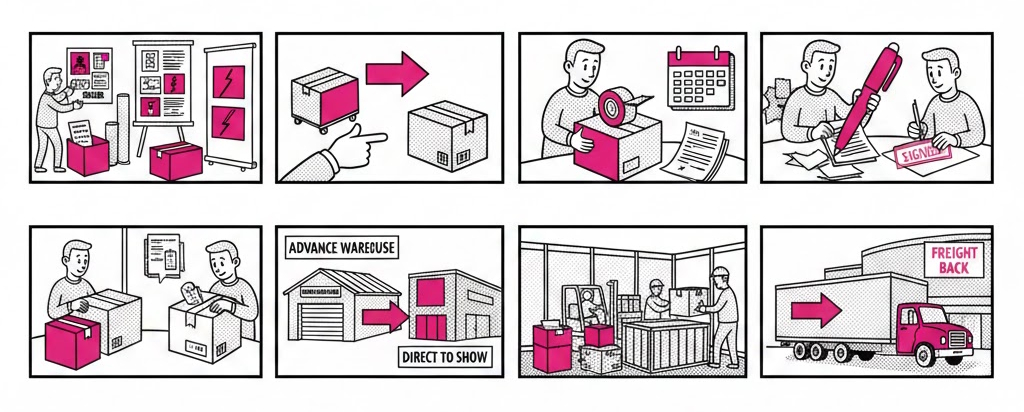
A clear checklist helps keep trade show logistics on track. By following these steps, you can avoid common mistakes and ensure a smooth shipping process.
Step 1: Prep Your Exhibit Materials
- Take inventory of everything for your trade show booth, from banners to trade show giveaways.
- Measure and weigh your shipment. The weight of your shipment affects shipping costs and material handling fees. Opting for lightweight portable display stands is one of the most effective ways to keep these costs down.
- Pick sturdy crates or pallets. Secure everything inside to reduce the risk of damage during transit.
Step 2: Choose Your Shipping Services
- Find a carrier who specialises in trade show shipping. Ask if they have experience shipping exhibits to your expo or next event.
- Book your shipment early. Weekends, holidays, and international trade shows require extra notice.
- Compare quotes and check what’s included (insurance, tracking, drayage).
Step 3: Pack, Label, And Book
- Label every crate, pallet, and box with your booth number, show name, and contact info.
- Include a detailed packing list inside each crate.
- Attach shipping labels to all sides. Make sure to label special items, like fragile displays, clearly.
Step 4: Complete The Paperwork
- Prepare your bill of lading. This is your proof of shipment and delivery instructions.
- Fill out the material handling agreement for the show decorator or general contractor.
- Confirm all delivery deadlines, and keep a copy of every document handy.
Step 5: Ship To The Advance Warehouse Or Direct To Show
- Arrange for your carrier to deliver to the advance warehouse if you want a safety buffer.
- If going direct to show, confirm your delivery window and be ready to wait in line at the marshaling yard.
- Track your shipment and stay in touch with your carrier for updates.
Step 6: Move-In And Material Handling
- On move-in day, check in at the dock or loading dock.
- The decorator and general contractor handle unloading and drayage, moving your freight to the show floor.
- Inspect your exhibit materials as soon as they’re delivered to the show floor.
Step 7: After The Show: Freight Back
- Book your return carrier ahead of time.
- Fill out the outbound bill of lading and material handling agreement.
- Pack up, label, and schedule pick-up at the designated dock.
Avoiding Pitfalls
These proven strategies can make trade show shipping much smoother:
- Always ship to the advance warehouse if you are new to trade shows, dealing with international trade, or concerned about possible delays.
- Never skimp on packing or insurance for your trade show exhibit. The risk of damage to fragile displays is high, and repair or replacement costs can derail your entire budget.
- Double-check shipping dates and delivery deadlines. Missing them can lead to extra fees or lost space on the show floor.
- Stay in touch with your shipper and track your freight until it is delivered to the show venue.
- Budget for material handling or drayage fees, as these can be higher than expected.
Successful trade show shipping starts with good planning and selecting a carrier who specialises in these logistics.
FAQs: Trade Show Shipping And Logistics
What is drayage in trade shows? Drayage covers moving your shipment from the loading dock to your booth. It’s separate from your shipping costs and can be pricey.
What documents do I need for trade show shipping? You’ll need a bill of lading, material handling agreement, and detailed packing list. For international trade shows, customs forms and insurance are essential.
How do I reduce the risk of damage? Use strong crates, bubble wrap, and clear labelling. Choose a carrier with experience in shipping exhibits.
What happens if my freight arrives late? Late shipments can end up in the marshaling yard, miss move-in, or get stuck with extra handling fees. Always plan ahead and ship early if possible.
Final Thoughts
Shipping to trade shows can feel overwhelming, but with the right steps, the process quickly becomes routine.
Many exhibitors encounter challenges, from lost crates to missed deadlines, but each event offers valuable lessons.
Start early, choose the right carrier, and always confirm delivery windows. Once your freight is taken care of, you can shift your focus to what happens on the floor — from capturing leads at your booth to making every visitor interaction count.