FREE UK delivery on orders of £200 or more
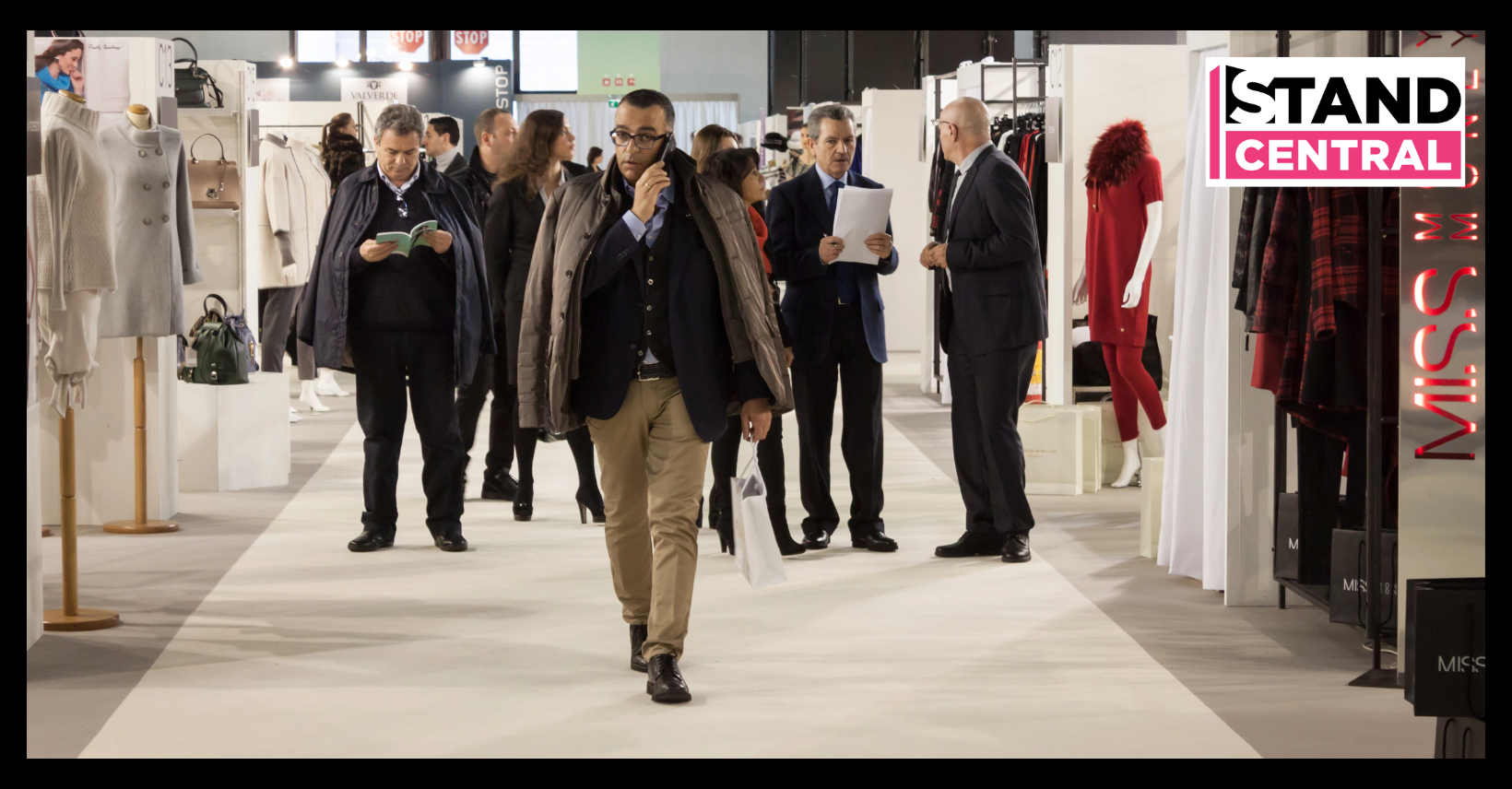
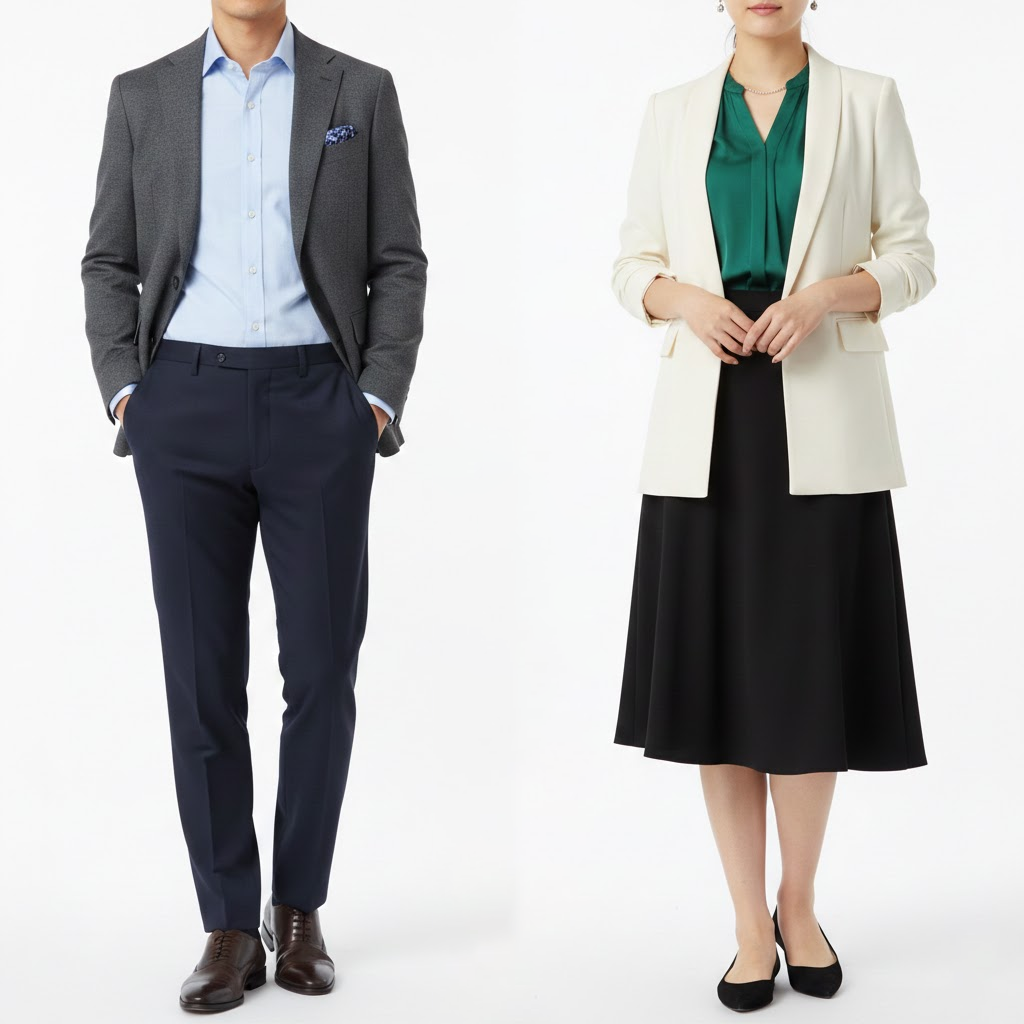
For most UK shows, smart casual is the right trade show attire. If you exhibit, wear matching branded tops with dark tailored trousers, a skirt or a dress, a light layer, and smart shoes you have already worn for a full day. Visitors can wear the same without the branding. Depending on the industry, step up to business attire (a suit) for finance, legal and other business professional shows, or if you are speaking.
Below: outfits for women and men, shoes, build-up day and a fair dress code for a stand team.
Quick answer: what to wear by role
| Role | Default outfit | Step up when | Avoid |
|---|---|---|---|
| Exhibitor (stand staff) | Branded polo, shirt or knit in one colour; dark chinos, tailored trousers, skirt or dress; smart cushioned shoes | Your buyers wear suits: add a blazer over the branded top | Logo-free mixed outfits that make staff look like visitors |
| Visitor | Smart casual: shirt or blouse, chinos or trousers, light jacket, comfortable shoes | You have booked meetings with senior buyers | Anything you could not walk in all day |
| Speaker or panellist | Suit or tailored separates in a solid colour | Always: you will be photographed and filmed | Fine stripes, noisy jewellery near a clip-on microphone |
| Build-up and breakdown | Practical work clothes and sturdy closed-toe shoes | The exhibitor manual sets safety rules | Your show-day outfit |
How to work out the trade show dress code for your next trade show
Few tradeshows publish a dress code, so read the signals:
- Check the manual and the organiser’s emails for rules on build-up safety clothing or an evening dinner.
- Look at photos from the last edition. Note what show exhibitors, not visitors, are wearing.
- Dress half a step smarter than your buyers. At a construction show that might mean a branded shirt and clean boots; at a financial services show, a blazer or suit.
- If in doubt, dress up on day one. Taking a jacket off is easier than finding one.
What women should wear at a trade show
Good trade show outfits for women balance three things: you will stand all day, you will wear a lanyard and badge, and you need somewhere for a phone, cards and a scanner.
- Tailored trousers or dress pants with a blouse, shirt or fine knit, plus a cardigan you can take off. A trouser with pockets saves carrying a bag.
- A midi dress or skirt with a layer. Knee length or longer works when you bend to pick up brochures.
- A jumpsuit or co-ord in a plain colour adds polish with almost no effort.
- Shoes: loafers, smart flats, low block heels or clean leather trainers. Pack high heels separately for an evening event.
- Accessories: small earrings and a watch. Long necklaces tangle with lanyards.
What men should wear at a trade show
- Chinos or slacks in navy, grey or stone. Dark colours hide marks from unpacking and leaning on counters.
- A branded polo shirt or button-down on the stand, or a plain shirt or fine knit as a visitor.
- An unstructured jacket to put on for meetings and take off when the hall warms up.
- Shoes: leather derbies, loafers or clean leather trainers, not stiff new dress shoes.
- Tie: only if your buyers wear them, or you are speaking at a formal sector show.
Wear branded clothing: dressing professionally as a stand team
Matching apparel does two jobs: visitors can tell at a glance who works on the stand, and your team looks like one brand. It also makes staff more approachable, because people know who to ask.
- Pick a colour that contrasts with your exhibition stand graphics. Staff in the same colour as the backwall disappear. Our guide to designing a trade show booth covers colours that carry across a hall.
- Wear branded tops with the logo on the chest, where it shows above a counter.
- Order the same item in a range of cuts and sizes, plus a spare per person.
- Let people choose trousers, a skirt or a dress within the colour scheme, and set shoe rules about comfort, not style.
If you set a dress code, keep it equivalent for everyone. Government Equalities Office guidance on dress codes and sex discrimination says requiring women to wear high heels is likely to be unlawful, as are make-up, skirt or hosiery rules with no equivalent for men. A rule that everyone dresses smartly is lawful, provided the definition is reasonable. The same applies to trade show models and promotional staff.
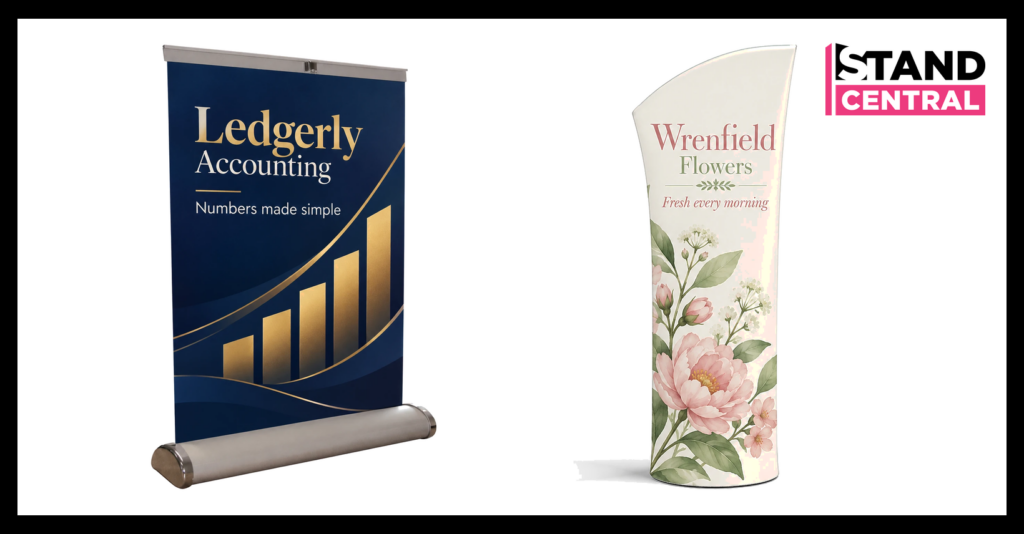
Choose the clothing colour when you order stand graphics. Browse our exhibition stands and pull up banners; FREE artwork design or proofing on every order.
Comfortable shoes: the decision that matters most
Most stands sit on a concrete hall floor with only carpet on top, and you spend the day on your feet. Plan your footwear first:
- Wear shoes you have already worn for a full working day.
- Bring a second pair and swap at lunchtime to change the pressure points.
- Choose cushioned soles and a low, stable heel. A clean leather sneaker in a dark or neutral colour counts as smart casual at most UK shows.
- Pack plasters and spare socks.
What to wear on build-up and breakdown days
Build-up is physical work. Wear practical clothes and sturdy closed-toe shoes, and change before the doors open. Check the manual for any rules on safety boots or hi-vis. If your stand is a set of portable exhibition stands such as roller banners or a pop-up, set-up is light work, so you can often build on the morning in clothes that will not crease.
Layers for halls that change temperature
Halls can be cold first thing and warm by mid-afternoon. Wear a light base layer under your branded top and a jacket or cardigan you can remove. Leave heavy coats in the cloakroom.
Dos and don’ts: what not to wear
- Brand-new shoes, untested heels, flip-flops or worn-out trainers.
- Ripped jeans, sports kit or slogan T-shirts: overly casual unless that genuinely is your brand.
- Strong perfume or aftershave: you will stand close to people all day.
- Loud prints that clash with your stand or the team.
- Clothes that need constant adjusting, or anything without pockets.
Professionalism on the trade show floor means looking ready to help: clean, comfortable and consistent makes a better impression than expensive.
Pack a small clothing kit for the stand
Keep a spare branded top, socks, plasters, deodorant, mints, a lint roller and a phone charger behind the counter. For everything else, see our list of trade show booth materials and our guide on how to prepare for a trade show.
Frequently asked questions
Can I wear jeans to a trade show?
As a visitor, dark plain jeans with a smart shirt and jacket are fine at most UK shows. On the stand, chinos or tailored trousers look more consistent with branded tops, unless jeans are an agreed team look.
What shoes are best for a trade show?
Shoes you have already worn for a full day, with cushioned soles and a low heel: loafers, a smart flat or clean leather trainers.
Are branded shirts a good option for a stand team?
Yes. They are smart enough for most shows, easy to brand and comfortable. Offer a choice of fits, and add a jacket if your buyers wear suits.
What should an attendee wear?
Business casual attire: a shirt or knit, chinos or trousers, a light jacket and comfortable shoes. Dress up if you have meetings with senior buyers.