FREE UK delivery on orders of £200 or more

If you are weighing up a fabric wall vs pop up wall, the short answer is that a fabric wall gives you more width for your money and a single smooth printed surface, while a pop up wall goes up faster because the frame opens out in one piece. If you exhibit a few times a year and want a wide backdrop at a sensible price, I would go for a fabric wall. If you set up and take down often, on your own, and want the stand ready in minutes, a pop up is the easier choice.
Below I go through the difference between tension fabric displays and pop up displays, how they compare on width, setup, transport and cost, and which I would buy for different events. The names overlap a lot, so I also explain where a fabric pop up sits, because it is a mix of the two.
Fabric wall vs pop up wall at a glance
| Fabric wall | Pop up wall | |
|---|---|---|
| Frame | Push-fit aluminium tubes | Folding scissor frame |
| Graphic | Fabric cover, zips on | Panels or one fabric graphic |
| Widths | 1m to 6m | 0.77m to 4.2m |
| Height | 2270 to 2380mm | 2210 to 2262mm |
| Floor depth | 400mm straight | 295 to 340mm |
| 3m class price | From £419.95 ex VAT | From £510.95 ex VAT |
| Weight | About 7.8kg | 7kg to 12.9kg |
| Setup | About 10 minutes | Opens in one piece |
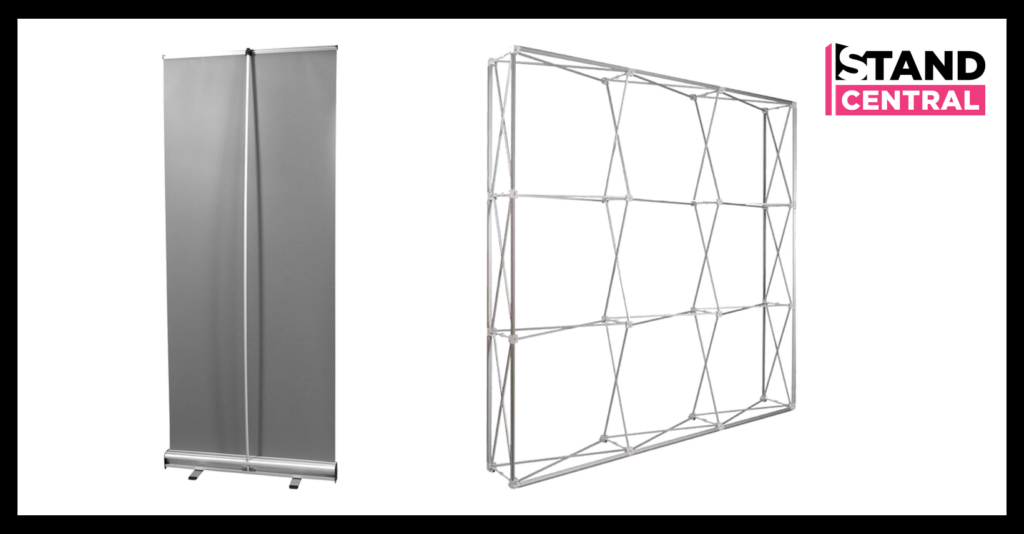
The headline difference is the frame. A fabric wall is a set of numbered aluminium tubes that push together into a rectangle, with a printed fabric cover pulled over it like a pillowcase. A pop up wall is a folding frame that you pull open and lock, then dress with printed graphic panels or one fabric skin. Both are lightweight, tool-free (apart from an allen key for the feet on some fabric walls) and made for indoor events. Our fabric display walls and pop up display walls cover both types, so you can compare the full ranges side by side.

The difference between tension fabric displays and a pop-up display
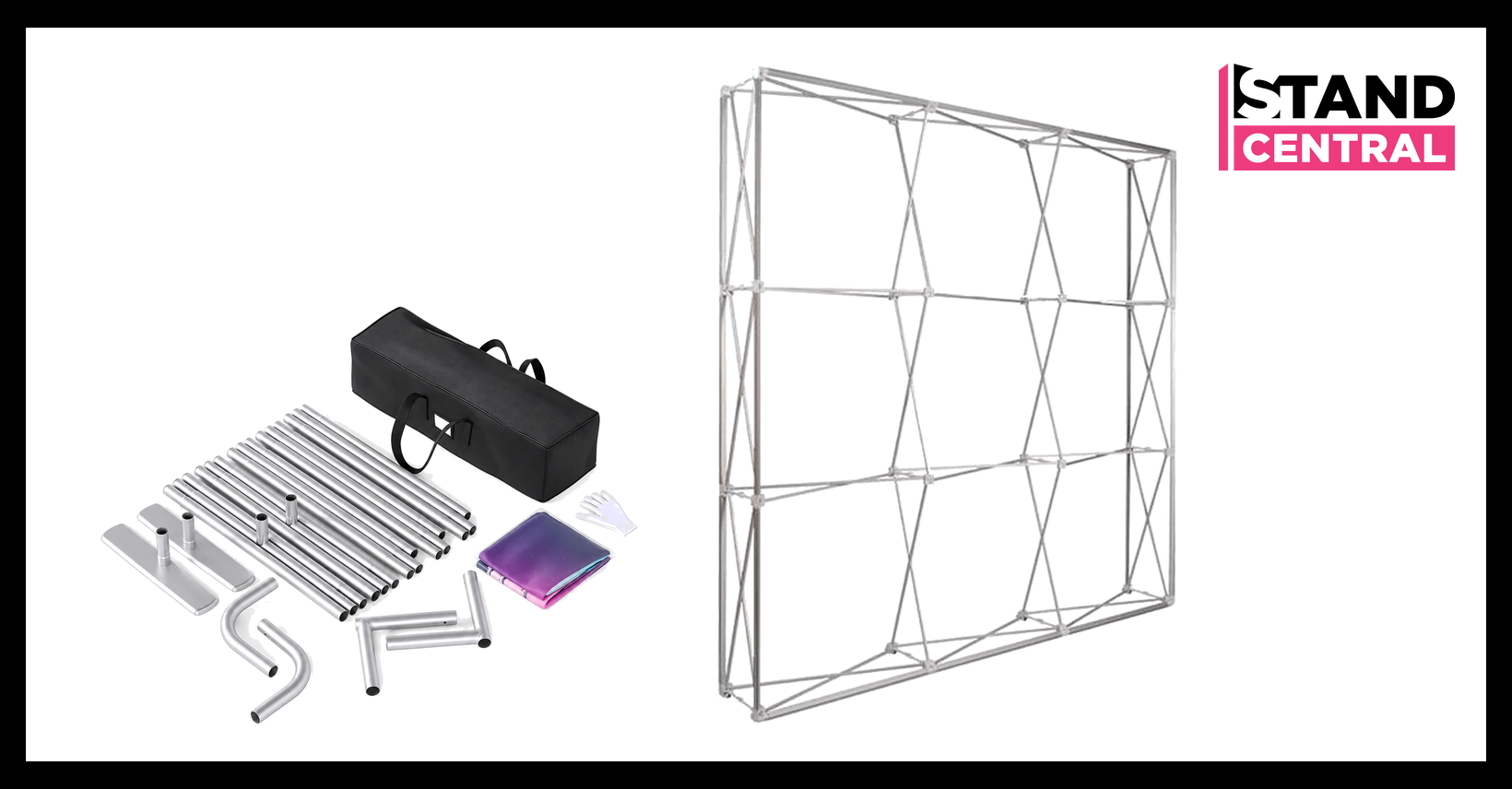
Tension fabric displays, which is what most people mean by a fabric wall, work by stretching fabric over a fixed shape. The frame on our stretch fabric walls is tubular aluminium. You push the sections together, pull the fabric cover down over the frame and close the zip along the bottom edge. The fabric pulls tight, so you get a smooth surface with no joins and no visible hardware on the front. Because the cover goes all the way round, you can have the back printed too, which turns the wall into a divider.
A traditional pop up display uses a scissor frame that folds down small and opens out like a lattice. On the Quick+ range the frame opens in one go, magnetic locking arms click into place and the printed graphic panels hang on magnetic bars. You get a backwall made of several panels hung side by side. The Quick+ panels are PVC-free polyester rather than vinyl, and the adjustable levelling feet keep them square on an uneven floor.
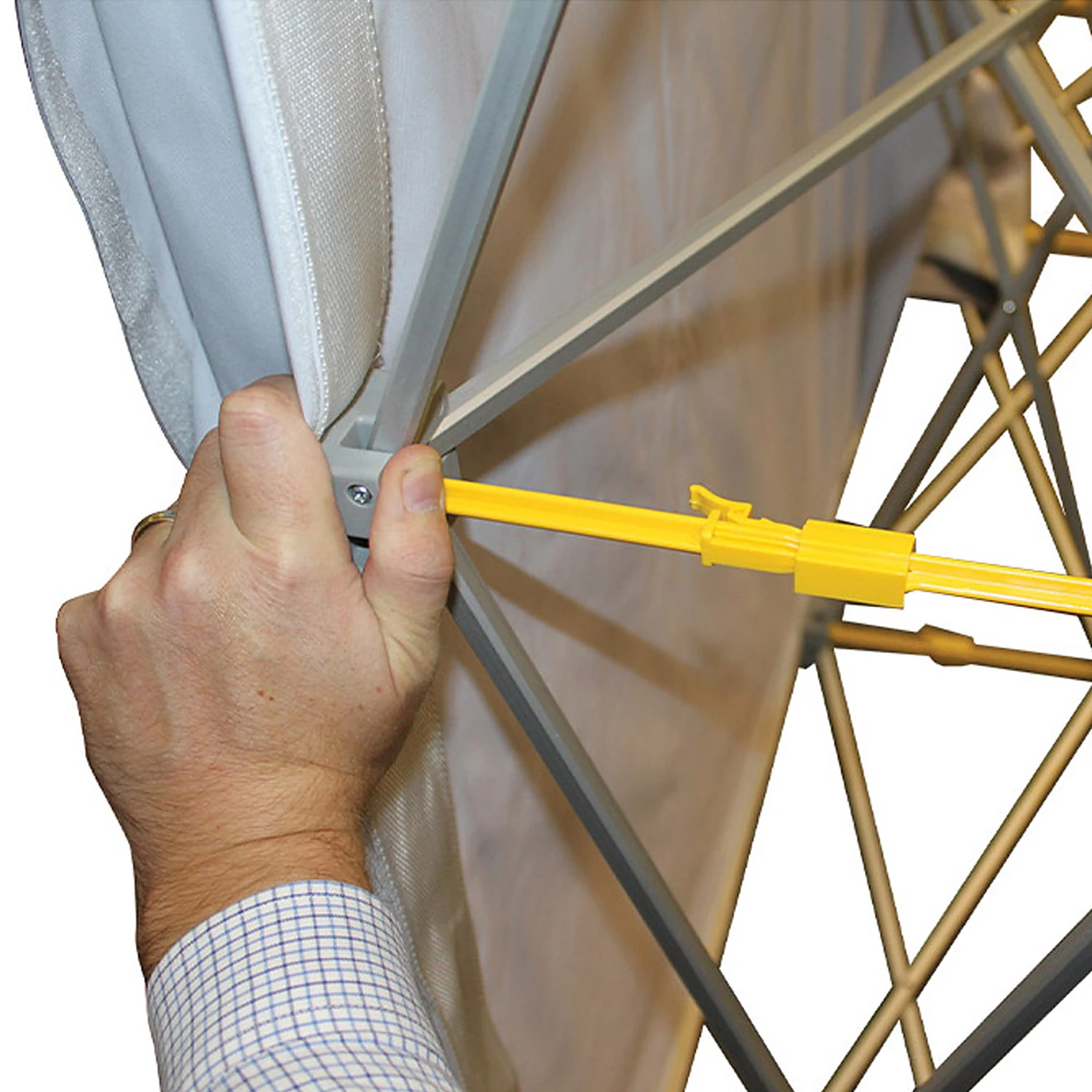
Then there are fabric pop up displays, such as our Hop-up and Textile ranges, which sit between the two. They keep the folding pop up frame but replace the panels with one stretch fabric graphic that fixes around the frame with hook and loop. So you get a single printed graphic like a fabric wall, with the fast frame of a pop up, and the graphic can stay on the frame when you fold it away. If you are choosing between fabric and rigid panels on a pop up specifically, that is a separate choice from the frame, and our SEG vs tension fabric guide covers the other common fabric system.
Size, height and the advantage of one graphic
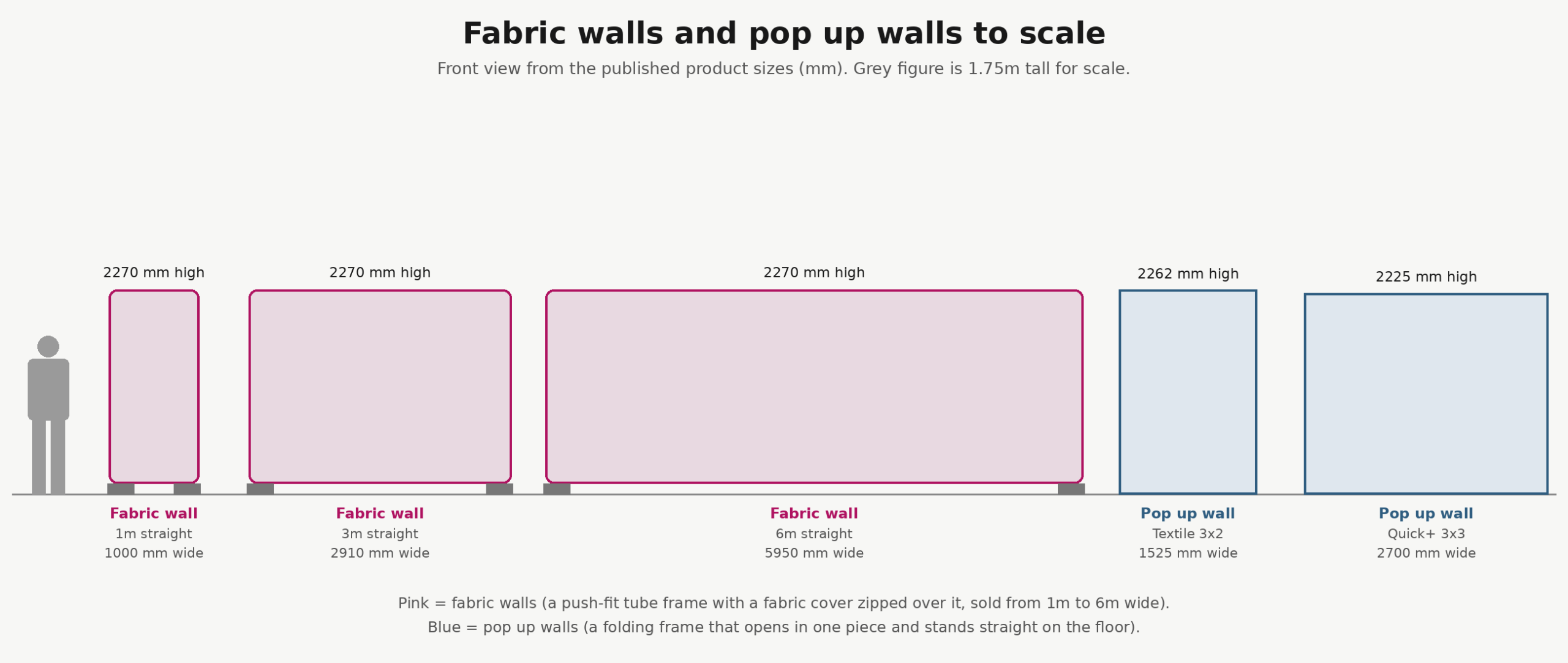
Width is where the two systems differ most. Our straight fabric walls come in one piece from 1m to 6m wide (the 6m is 5950mm), so a single wall can fill the back of a large space. Pop up walls are sold in frame sizes, from 770mm for a single-section SEG pop up to 4165mm for the widest straight model we sell, the Pop Up Stand 5x3. Past that you would need two pop ups side by side, with a join where they meet.
Height is close. The straight stretch fabric walls are 2270mm tall and the Formulate 2.95m wall is 2380mm, while the straight pop ups in this guide sit between 2210mm and 2262mm. A little extra height helps in a busy hall, because the top of the graphic is what people still see over the visitors in front of you. Depth goes the other way: a straight fabric wall needs about 400mm of floor for its feet, a curved one 600mm, and a straight pop up only 295mm to 340mm.
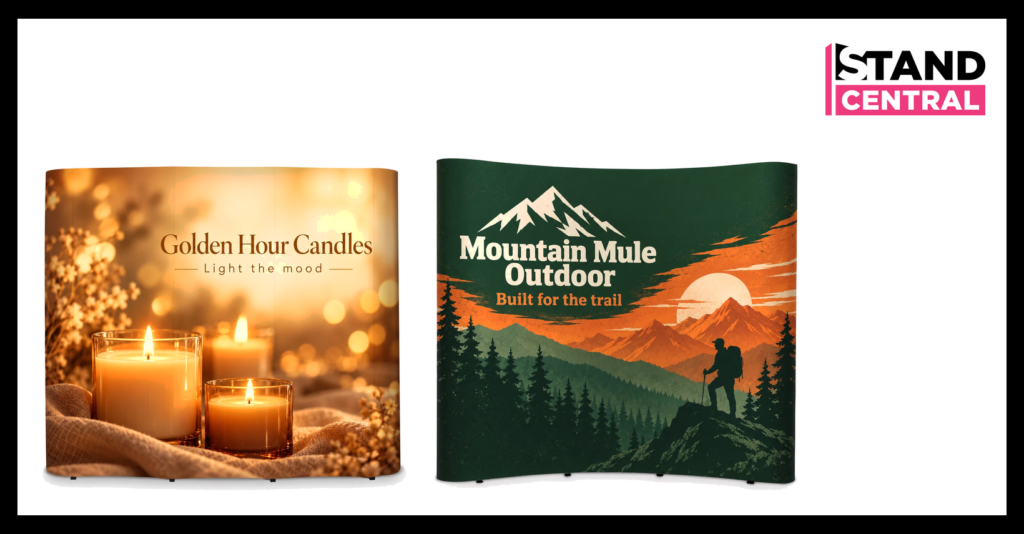
On the graphic itself, a fabric wall gives you one printed surface with nothing breaking it up, which suits large photos and a logo that runs across the middle. A panel pop up has fine joins between panels, so it is worth keeping faces and small text away from them when you design. Either way, every order includes FREE artwork design or proofing, and our artwork guidelines explain the file setup.
Lighting is worth a thought too. A fabric display lets some light through, so a strong lamp shining from behind can show the outline of the frame. Our product pages advise lighting a stretch fabric display from the front and keeping bright spotlights off the back, and for the Formulate walls you can ask us about a blockout liner if the display will sit under bright lights. On a pop up display with a fabric graphic, such as the Hop-up, Powerspot LED exhibition lights can be added to lift the graphic in a dim hall.
Frame, setup and assembly comparison
This is the pop up’s strongest point. A pop up frame comes out of the bag in one piece, you pull it open and the arms lock it into shape, so there are no loose parts to sort out. On the Hop-up and Textile fabric pop ups the graphic stays attached, so the frame and graphic go up together. On the Quick+ you hang the magnetic panels after the frame is open. It is designed for one person, without tools.
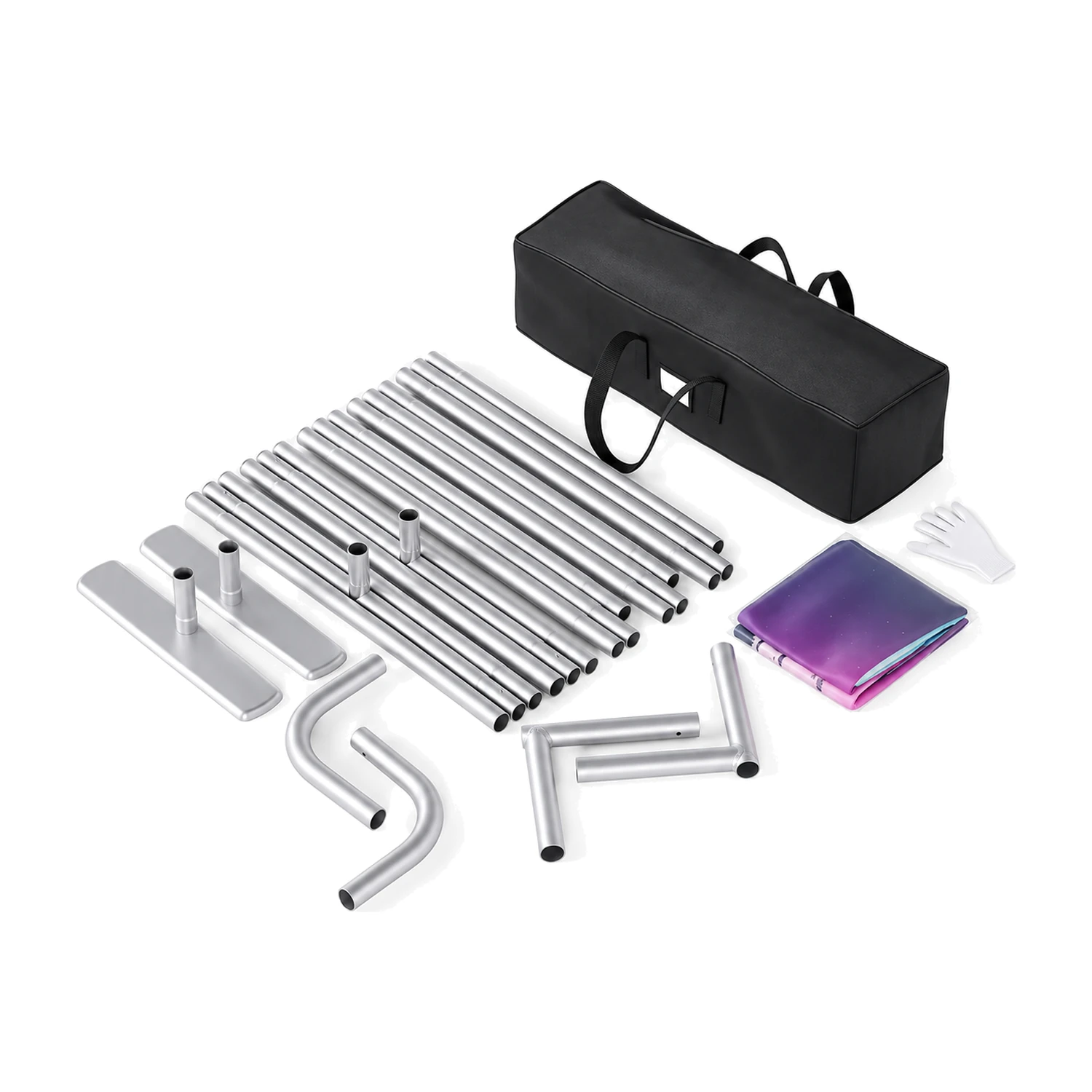
A fabric wall takes a few more steps. You join the numbered tubes, fit the feet, pull the fabric over and zip it closed. Our product pages allow about 10 minutes, and say that one person can build the frame but two make fitting the fabric much easier, especially on the wider sizes. Gloves come with the stretch fabric walls so you can handle the fabric without marking it. None of that is hard, but if you are on your own at seven in the morning with a show opening at nine, the pop up is less fuss.
Transportation, storage and replacement fabric graphics
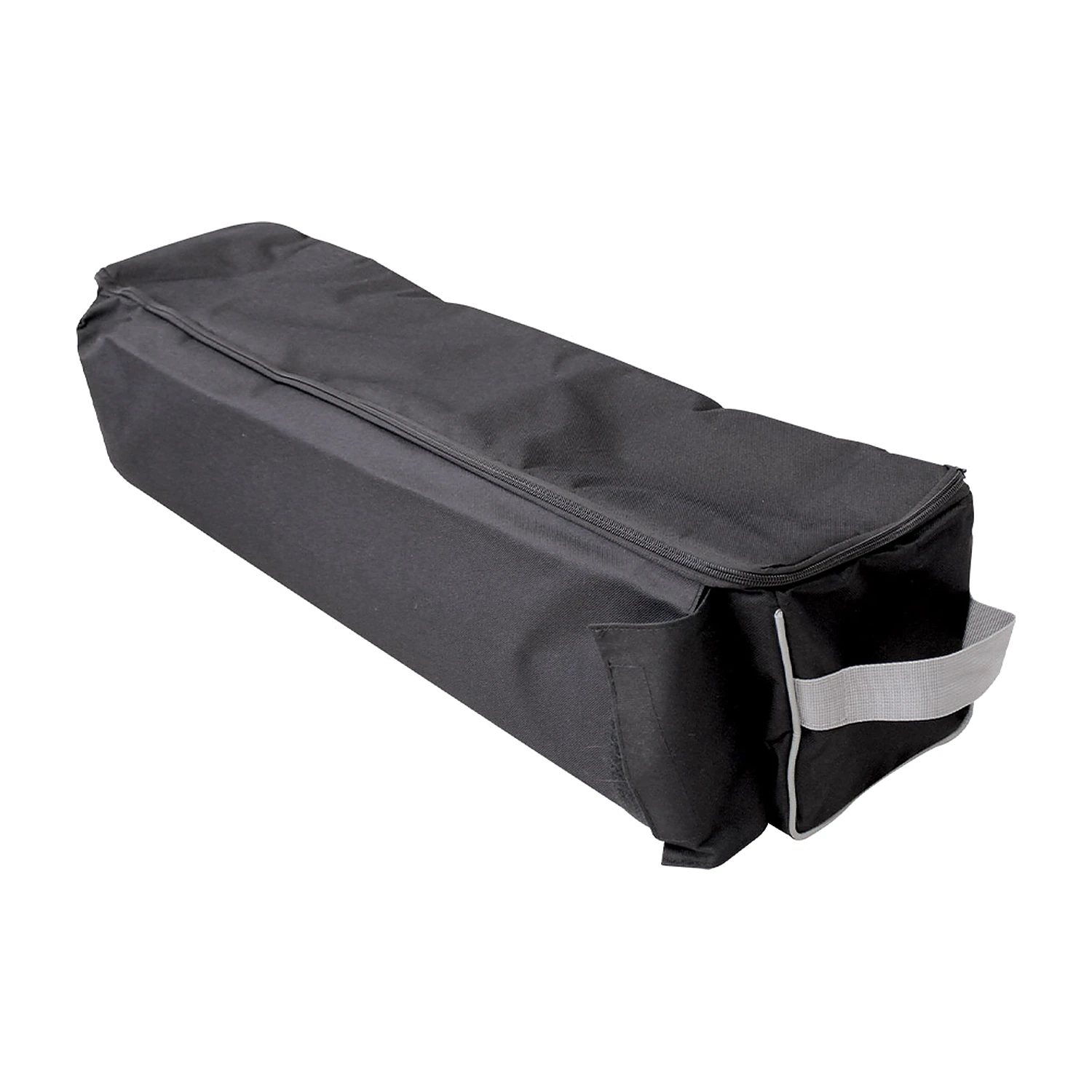
Both systems are portable, but they pack differently. A fabric wall breaks down into short tubes and a folded cover. The Formulate 2.95m wall weighs 7.8kg and packs into a padded bag with separate compartments for the frame and the fabric. On the larger stretch fabric walls the folded fabric travels separately from the frame bag.
A pop up folds into a fatter bundle that stays in one piece. The Quick+ 3x3 weighs 8.1kg in a padded bag, the Hop-up 3x3 is 8kg in a wheeled bag and the Textile 3x3 is 9.3kg with a wheeled case. The bigger the pop up, the heavier it gets: the Textile 3x5 is 12.9kg. A wheeled case is easy across a hall floor, and either type fits in a car boot.
For storage and the long term, a tension fabric display has two advantages. The fabric graphics fold small and can be washed at 30°C, and a replacement graphic is just a new printed cover for the same frame. Pop ups can be rebranded too, with new panels or a fresh graphic, so neither locks you into one design. The frame is the part you buy once.
Cost comparison for a 3m wide backwall
For a backwall close to 3m wide, the 3m straight stretch fabric wall is £419.95 ex VAT for 2.91m of print. The Quick+ 3x3 straight pop up is £510.95 ex VAT for 2.7m, and the Textile 3x3 straight fabric pop up wall is £524.95 ex VAT for 2.26m. Worked out per metre of width, that is about £144 for the fabric wall, £189 for the Quick+ and £232 for the Textile.
So the fabric wall is £91 cheaper than the Quick+ 3x3 and gives you 210mm more width. The gap grows if you want both sides printed. The double-sided version of the 3m fabric wall is £464.95, only £45 more, because the cover simply carries print on the back. A double-sided Quick+ 3x3 is £779.95, which is £269 more than the single-sided one. Prices for both include the print.
The wider you go, the more the fabric wall pulls ahead. The 6m straight stretch fabric wall is £772.95 ex VAT, about £130 per metre. The widest straight pop up we sell, the 4165mm Pop Up Stand 5x3, is £898.95 ex VAT, so the fabric wall costs £126 less and is 1785mm wider, in one piece.
Which display type suits your brand at a trade show
My rule is to choose the frame by how often you set up and who does it, then choose the width. A trade show with a full day of build time suits either display, so the decision usually comes down to the rest of your year.
- Choose a fabric display if you want the widest backwall for your budget, a single printed surface, or print on both sides.
- Choose a fabric wall if your space is wider than about 4.2m and you want it covered by one display with no joins.
- Choose a pop up display if you exhibit often, set up on your own, or have very little time on build day at a trade show.
- Choose a fabric pop up (Hop-up or Textile) if you want one fabric graphic but the fast pop up frame.
- Choose a panel pop up like the Quick+ if you like the crisp look of separate panels and want them easy to swap.
On a typical 3m x 2m space either type fits along the back with most of the floor left free. A fabric wall covers more of the width, and a pop up sits a little shallower. If your plan has a counter at the front and people standing in the middle, the 94mm difference in depth is unlikely to decide it.
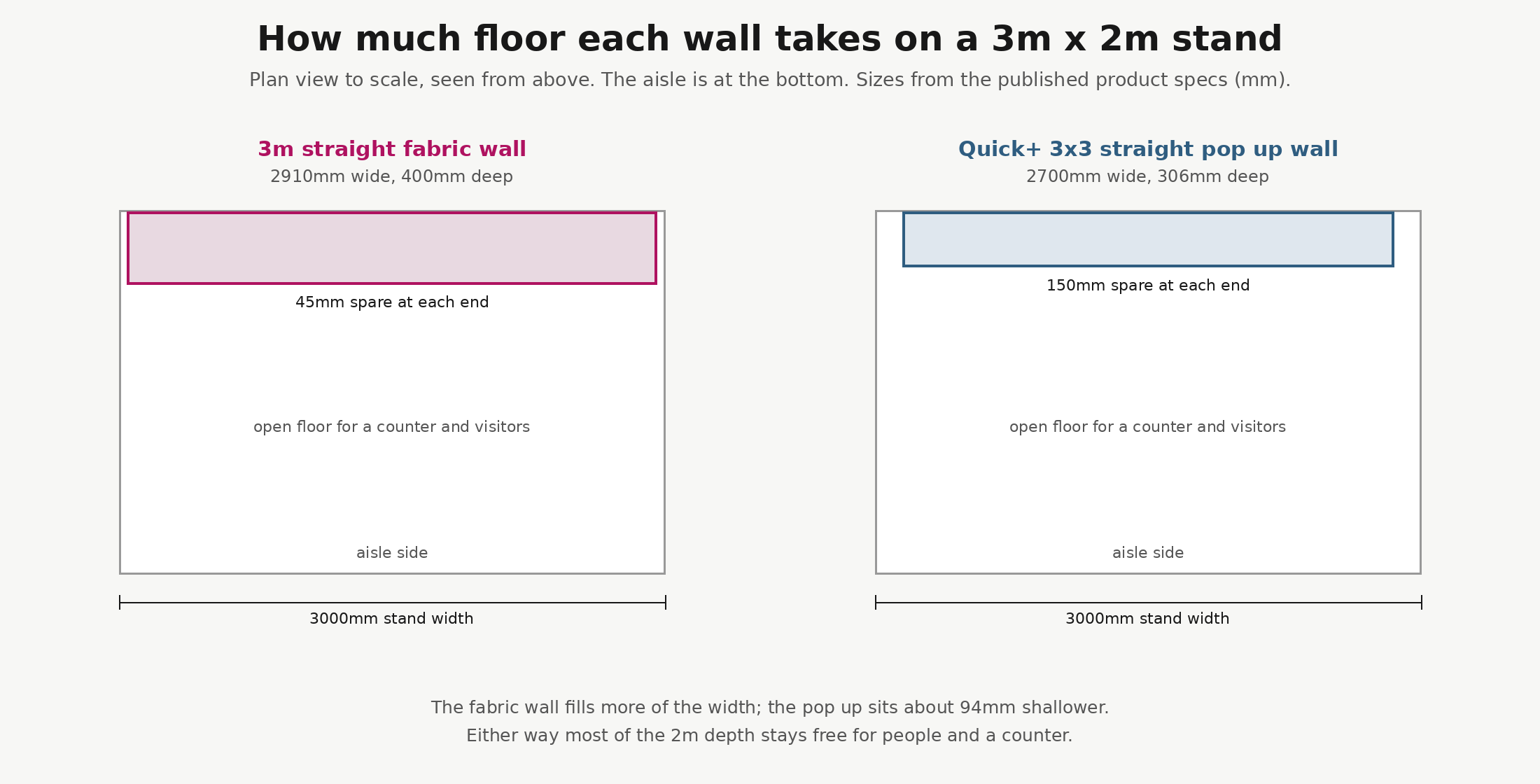
If you are an exhibitor who does one or two big shows a year with help on site, I would buy the fabric wall and put the saving towards lighting or a counter. If you are doing lots of smaller events in hotels and conference centres, the Hop-up 3x3 fabric pop up or a Quick+ will save you time at every one. For curved shapes, our curved vs straight pop up stand guide helps with the layout, and if you are thinking about a bigger build with side walls, see pop up stand vs modular stand.
Where each display works beyond the stand
A fair amount of the advice online is American and talks about a 10x10 booth, which is roughly a 3m x 3m stand here. The same reasoning holds for UK spaces, but think about where else the display will be used, because that often settles it.
Our stretch fabric walls are sold as backdrops for sponsor walls, awards evenings, press calls and photo areas as well as stands, and at 5950mm the 6m wall is wider than any single pop up we sell. If the display may also stand in the open, as a room divider or between two areas, a double-sided fabric wall is the cheaper way to get print on both faces.
A pop up suits the opposite pattern: lots of shorter events, such as hotel meetings, conferences, recruitment days and retail promotions, where one person turns up, builds the wall, packs it away and moves on. The graphic stays on the frame on a fabric pop up, so the time saved adds up across a busy year.
Frequently asked questions
What is the fabric wall vs pop up wall price difference?
For a backwall around 3m wide, our 3m straight stretch fabric wall is £419.95 ex VAT and the Quick+ 3x3 straight pop up is £510.95 ex VAT, so the fabric wall costs about £91 less while giving 210mm more width. Prices were checked on 31 October 2026 and include the print.
Which costs less to run, a fabric display or a pop up display?
Both reuse the frame, so a new design only means a new graphic. A fabric wall needs one new cover, and the cover can be washed at 30°C between shows. A pop up needs new panels or a replacement graphic. Double-sided print adds far less to a fabric wall than to a panel pop up.
Are tension fabric displays harder to set up than a pop up?
It takes a few more steps. You push the numbered tubes together, fit the feet and zip the cover on, which our product pages put at about 10 minutes. One person can build the frame, but a second pair of hands makes fitting the fabric easier. A pop up frame opens out in one piece.
Can a pop up wall have a fabric graphic?
Yes. Our Hop-up and Textile ranges are fabric pop ups. They use the folding pop up frame with one stretch fabric graphic that fixes around the edges with hook and loop. The graphic can stay on the frame when you fold it down, which saves time at both ends of the day.