FREE UK delivery on orders of £200 or more
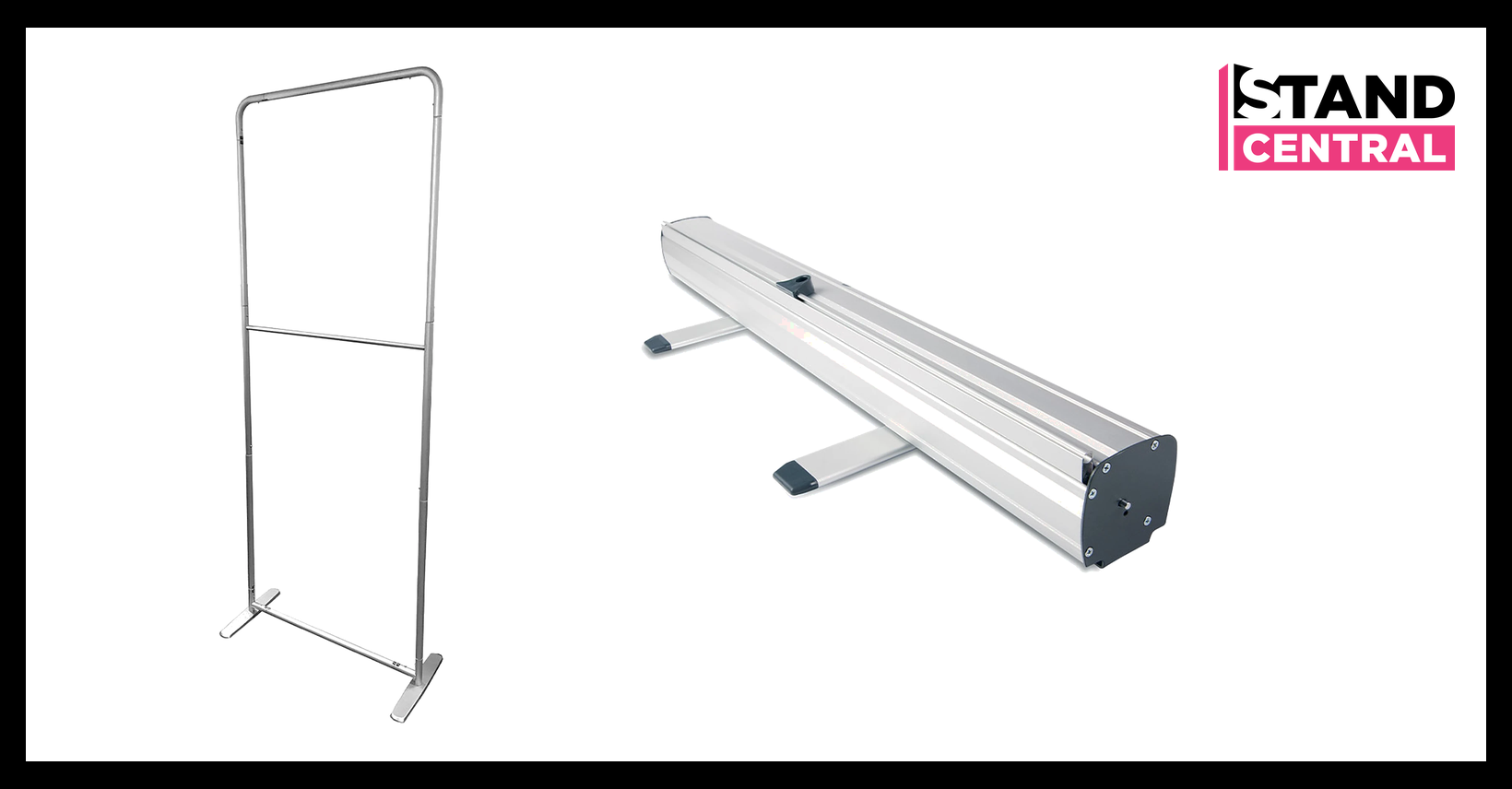
Choose a stretch-fabric stand if you want a removable cover and a double-sided display for an open floor position. Choose a vinyl roller banner if a lower purchase price and a graphic that retracts into its base are more useful. The fabric banner vs vinyl banner decision should start with the complete stand you need, because the material alone does not tell you how it packs or whether it works with your existing hardware.
For an indoor exhibition, I would compare the fixing method before comparing the finish. A fabric sleeve designed to stretch around a frame is not a substitute for the sheet fitted inside a roller cassette. Both can carry the same artwork, but they are different purchases.
Fabric banner vs vinyl banner material comparison
The examples below are complete stands from our current range. Prices were checked on 26 October 2026 and are shown ex VAT. They are not like-for-like quotations for loose printing: the frames and printed sides differ, which is part of the buying decision.
| Stand | Graphic | From price |
|---|---|---|
| Mosquito 800mm | 440gsm vinyl, one side | £109.95 ex VAT |
| Monolith 800mm | 260gsm fabric, both sides | £262.95 ex VAT |
| Soft Touch 800mm | 260gsm fabric, both sides | £188.95 ex VAT |
The Mosquito is the lower-priced option in this comparison. Choose it for a single message facing people approaching from one direction. The double-sided fabric options are worth considering when visitors will see the back as well as the front. Paying more for a rear face that sits against a wall would not help that particular position.
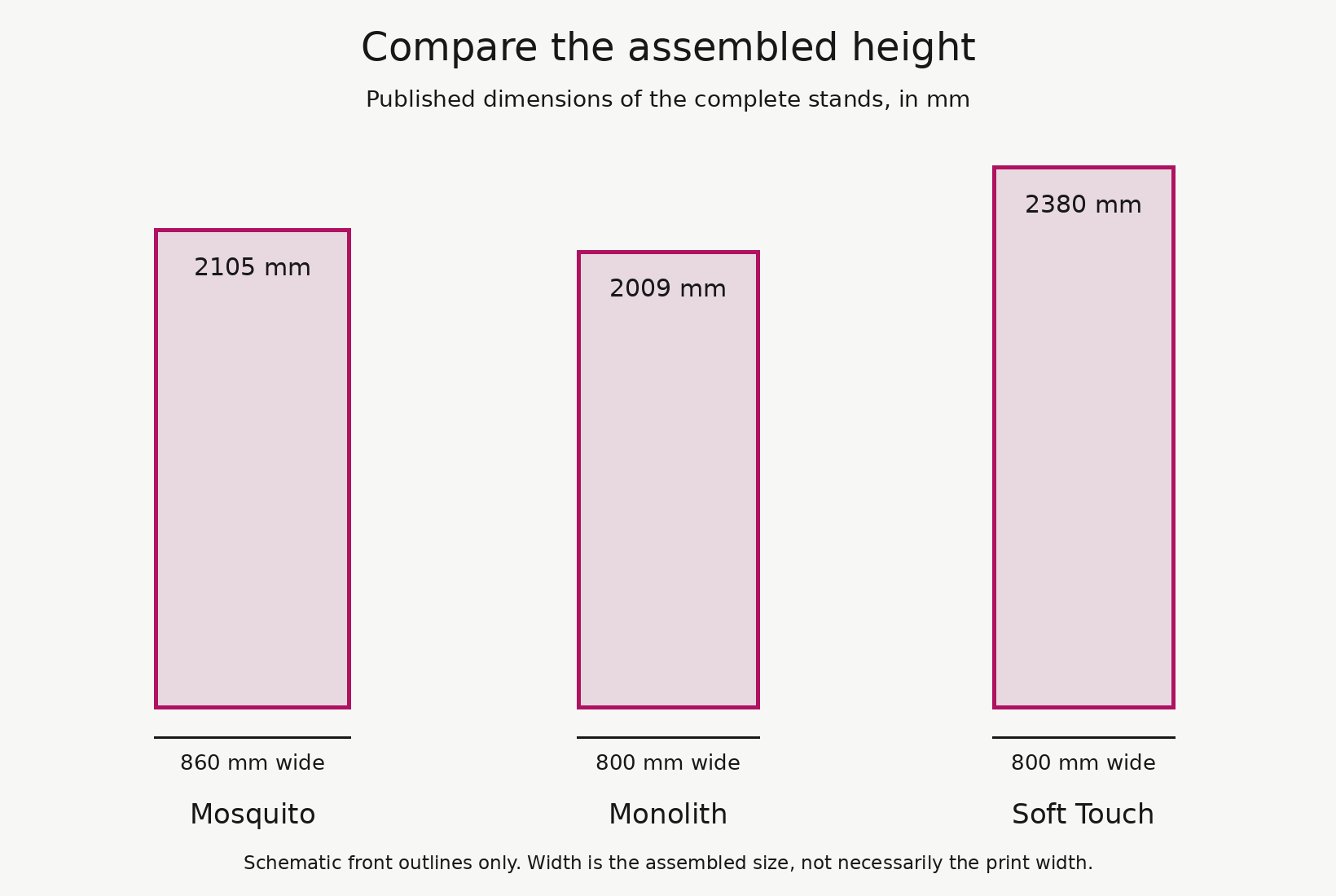
Our fabric banners include different frames and heights. Do not assume that matching the stated width gives you the same overall shape. The Soft Touch example is taller than the Monolith, so compare the assembled dimensions if your allocated space has a height restriction.
Choose fabric banners for a removable polyester cover
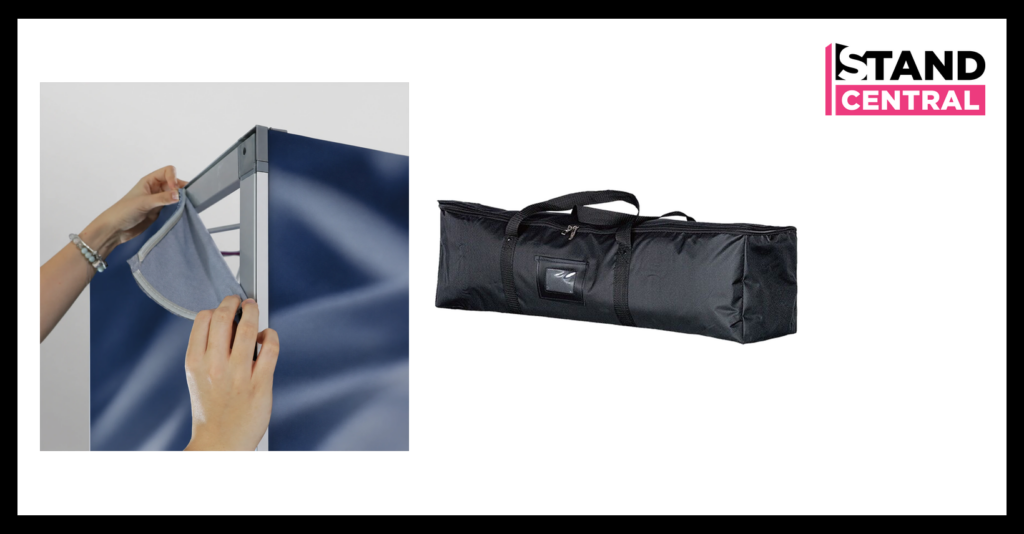
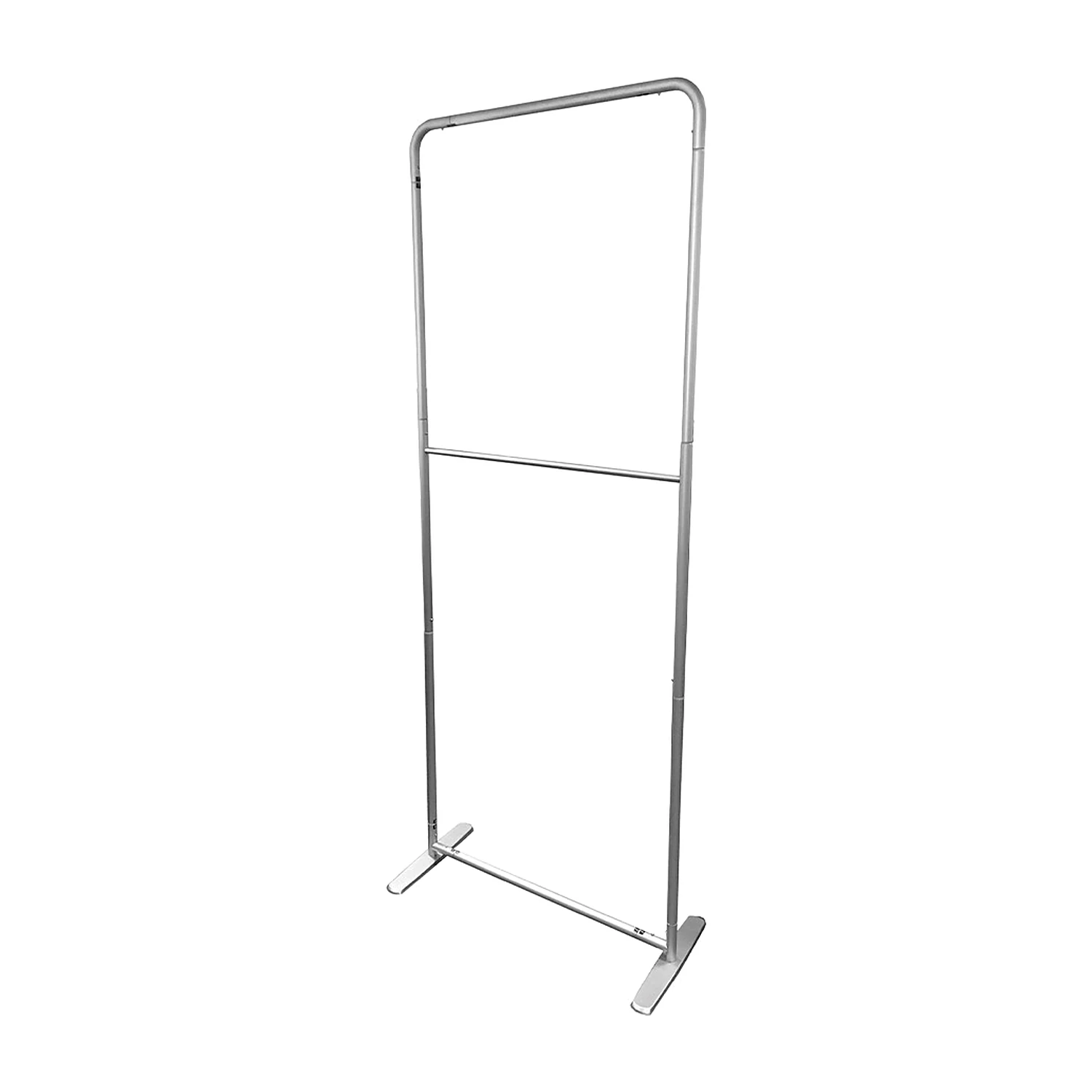
The Monolith uses dye-sublimation printing on stretch polyester fabric. Its cover slides over the assembled frame like a pillowcase and closes with a zip at the base. That is a useful choice if you want the printed face to wrap around the structure rather than end at an exposed top rail.
Its product specification says the fabric can be folded and washed. That makes this particular cover worth considering when cleaning and separate storage are priorities. It is not a promise that every fabric banner material can be treated the same way. Follow the care instructions for the actual cover you buy, rather than applying household laundry settings to it.
The Soft Touch alternative also uses a stretch polyester graphic. Its listing specifies washing at 30°C with little or no detergent, low-heat ironing on the reverse, and no tumble drying. Those are product-specific instructions, not a general rule for all polyester banners. If your team needs washable graphics, buy a model that gives those instructions clearly.
Choose the double-sided version for a position where the back will be visible and has a job to do. You might want the same message on both faces, or different messages for opposite approaches. If the stand will stay against a wall, compare the single-sided version instead. A material upgrade does not compensate for choosing the wrong viewing direction.
Choose vinyl banners when the roller cassette suits the job
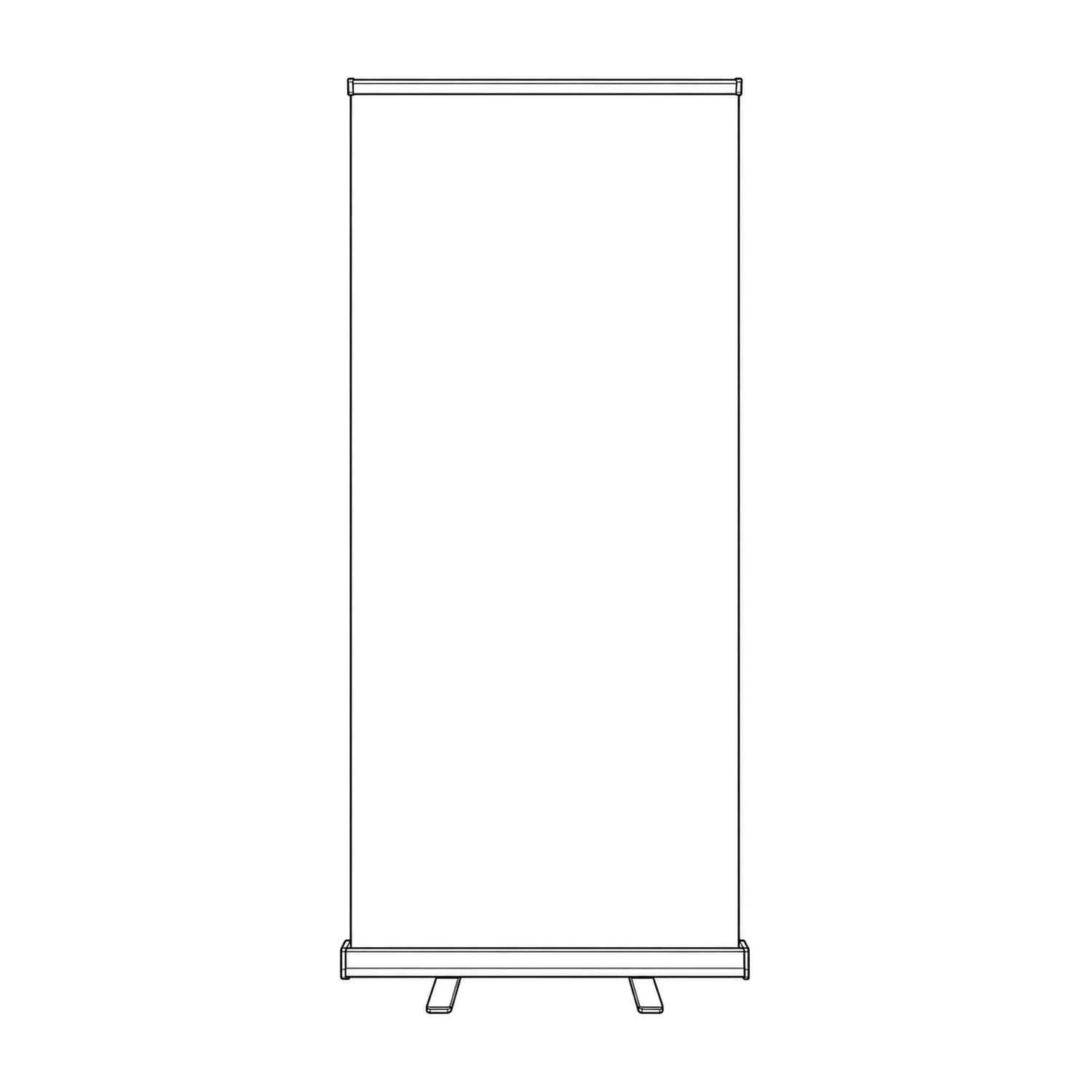
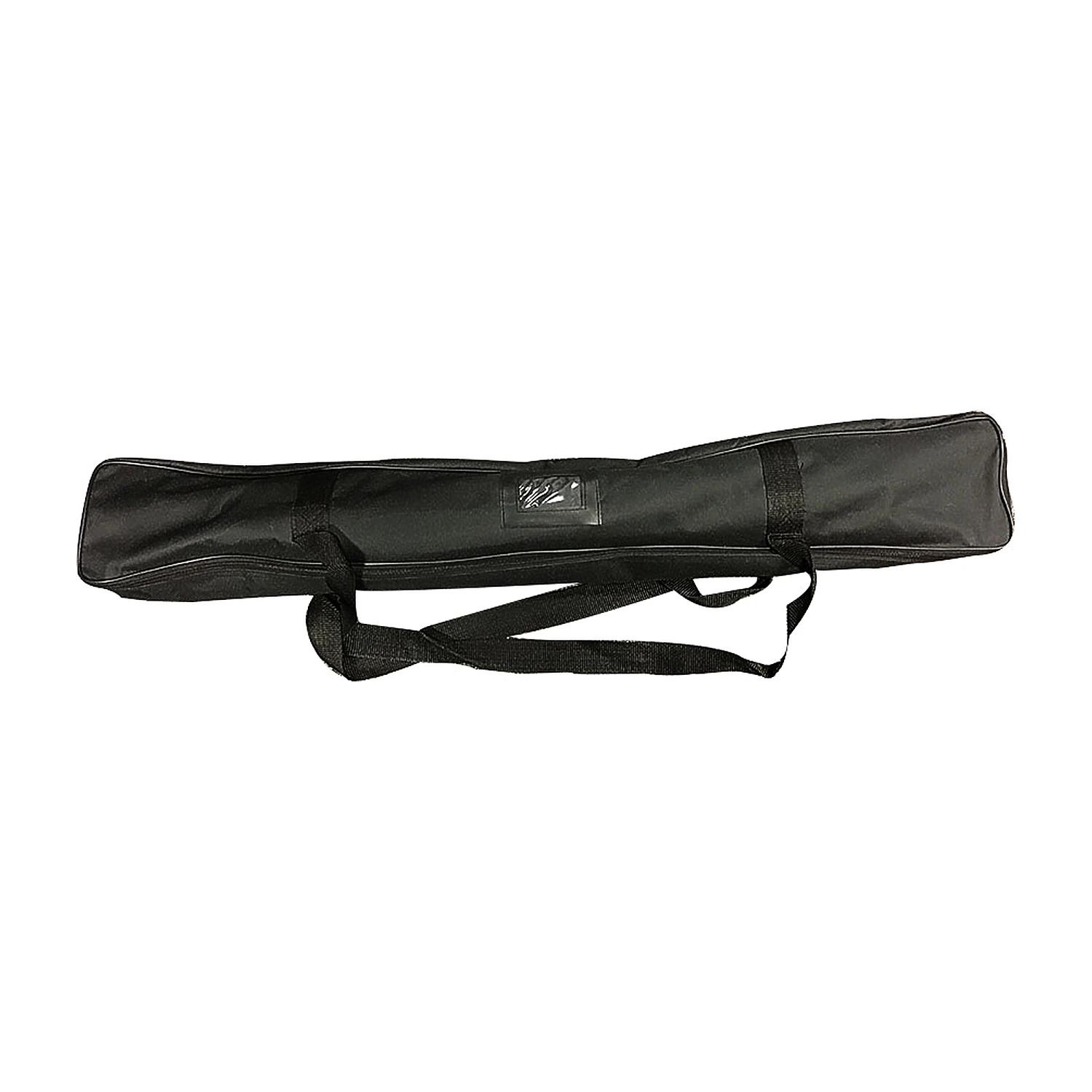
The Mosquito uses a single-sided, latex-printed vinyl graphic with a snap top rail. Its base has twin twist-out feet and the stand comes with a padded bag. For a team that wants to pull the graphic up from its own housing and pack it back into that housing afterwards, this is the more relevant distinction than whether fabric sounds more premium.
Vinyl banners in roller systems should be assessed as a complete mechanism. The graphic must suit the attachment and the way it rolls. If you already own a cassette, do not order another material simply because it has the same nominal width. Confirm the compatible graphic specification and fitting before spending money.
The Mosquito listing describes its economy vinyl as lightly textured. It also describes a premium option with a light-blocking back and a smoother face. If strong lighting behind the stand is a concern, ask about that specific option rather than assuming all vinyl banner material is equally opaque. Compare the quote for the chosen finish, not the starting price for a different one.
The best material for a roller banner
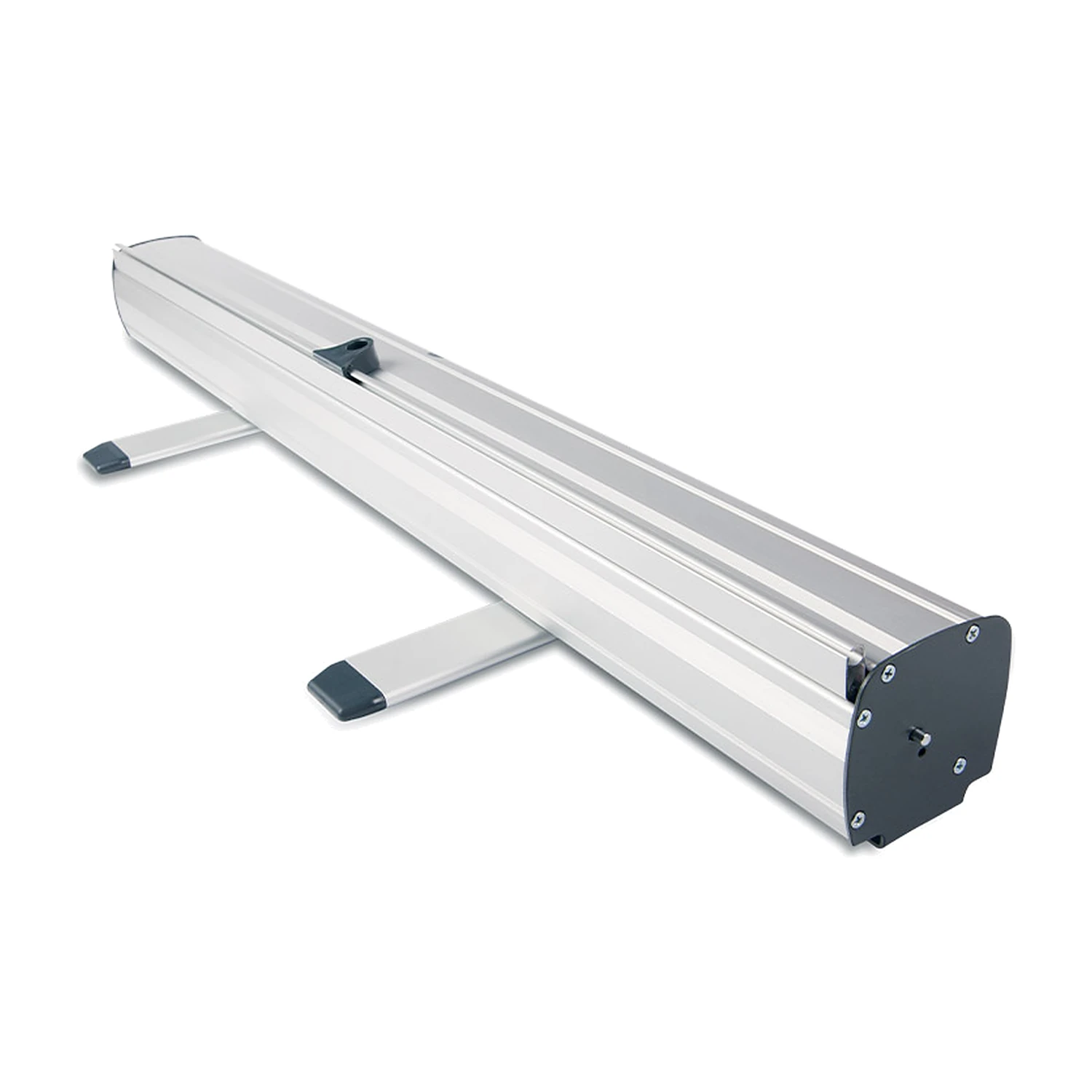
The best material for a roller banner is a graphic specified for that particular cassette. For the Mosquito shown here, the standard choice is 440gsm economy banner vinyl. That gives you a documented match between the printing, the rail and the retracting mechanism. I would choose that complete product over trying to fit an unrelated textile into a base you already own.
A PVC vs fabric roller banner comparison can be misleading when the fabric example is actually a separate tension frame. PVC is the material listed for the Mosquito graphic; the Monolith is assembled from tubular sections with a cover over them. Neither arrangement is automatically better. Choose the one that matches how you want to set up and pack away.
If you are searching for the best material for pull up banner use, decide whether you need a new complete stand or a compatible change to an existing one. The latter needs a model check first. A removable cover on a tension frame does not mean you can remove and refit a roller graphic in the same way.
For a new purchase facing a wall, I would start with the Mosquito and check whether its finish meets the artwork requirement. For an open position where both faces matter, I would compare the double-sided fabric options. That keeps the recommendation tied to the job rather than treating one substrate as the winner in every situation.
Print quality and appearance under indoor lighting
Judge the printed result using the artwork you intend to use. A design with large areas of flat colour may make surface texture more noticeable than a photograph does. Ask to see a relevant material sample if that finish determines the purchase. A product image can show the shape of a stand without proving how your colours will look in a particular room.
The Monolith specification names dye-sublimation and the Mosquito names latex printing. These describe how those products are printed; they do not establish that one will always reproduce an image better. File quality, the selected substrate and the lighting all belong in the comparison. Do not choose on a claim of sharper print quality unless it applies to the actual option being quoted.
Buying for repeated use and storage
For repeated campaigns, compare what you keep when the message changes. The Monolith product page describes keeping its frame and feet and changing the fabric. That is a reason to consider it when your campaign artwork changes but the display position stays the same. Keep the product details with your purchase so future graphics can be matched to the correct model.
For vinyl banners, the practical question is whether the selected cassette supports the change you need and who will fit it. Do not assume every roller base has an equally straightforward replacement process. A lower initial price can still be the sensible choice for one campaign; it does not tell you the cost of future changes.
Durability is also about handling. A durable graphic cannot protect a damaged frame, and a padded bag does not make equipment immune to knocks. Compare the included case and how your team will store the whole kit. Neither fabric nor vinyl has a useful universal lifespan that can be promised from its material name alone.
For indoor banners taken between venues, check packed dimensions as well as weight before ordering. A light stand can still be awkward to fit into the vehicle you use. The Monolith comes with a carry bag, while the Mosquito has a padded bag; that is useful information, but neither description proves it will fit your particular luggage or car.
Keep outdoor claims separate from this choice
All the complete stands in the table are specified for indoor use. Do not treat vinyl as permission to put an indoor roller outside. Weather resistance of a sheet and stability of the whole stand are separate questions, particularly where wind can act on the printed area.
Search results often mix these products with outdoor banners, mesh banners and fence graphics. Those are different buying jobs. If your event needs outdoor use, this indoor comparison does not establish a suitable purchase. Choose equipment expressly specified for that setting instead of inferring suitability from the material.
Which option I would choose for your business
For a lower-cost single-sided message, start with the Mosquito. For a removable fabric cover on an open floor position, compare the double-sided Monolith and Soft Touch. Check the height before choosing between them, and only pay for the second face if people will actually see it.
The right banner material follows from that decision. There is no need to turn a straightforward indoor purchase into a comparison of every available substrate. Stand Central provides FREE artwork design or proofing on every order. The practical next step is to choose the frame and printed sides, then confirm the artwork against that product.
Frequently asked questions
What is the difference between vinyl and fabric?
In the products compared here, vinyl is the graphic fitted to the Mosquito roller, while stretch fabric forms a cover around a separate frame. The difference affects assembly and storage as well as appearance. Compare the complete stand and its fitting method, not just the names of the materials.
Is a fabric banner better than a vinyl banner?
It depends on the position and the hardware you want. A removable fabric cover suits a reusable tension frame, including the double-sided options shown here. A vinyl roller can be a lower-cost choice for a single forward-facing message. Neither material is automatically the better purchase for every event.
Can I wash fabric banners?
Check the individual product instructions. The Monolith listing says its fabric can be washed; the Soft Touch example gives a specific wash temperature and drying restrictions. Do not assume the same treatment is suitable for another cover. Choose a product with documented care instructions if washing matters to your purchase.
Are PVC banners suitable outside?
A PVC graphic does not make an indoor stand suitable outside. The Mosquito in this comparison is specified for indoor use, even though its graphic is vinyl. Choose the complete system according to its stated use. Do not rely on a general material description to establish wind or weather suitability.